Affordable Houses for Rent by Private Owners: A Smarter Guide for Renters
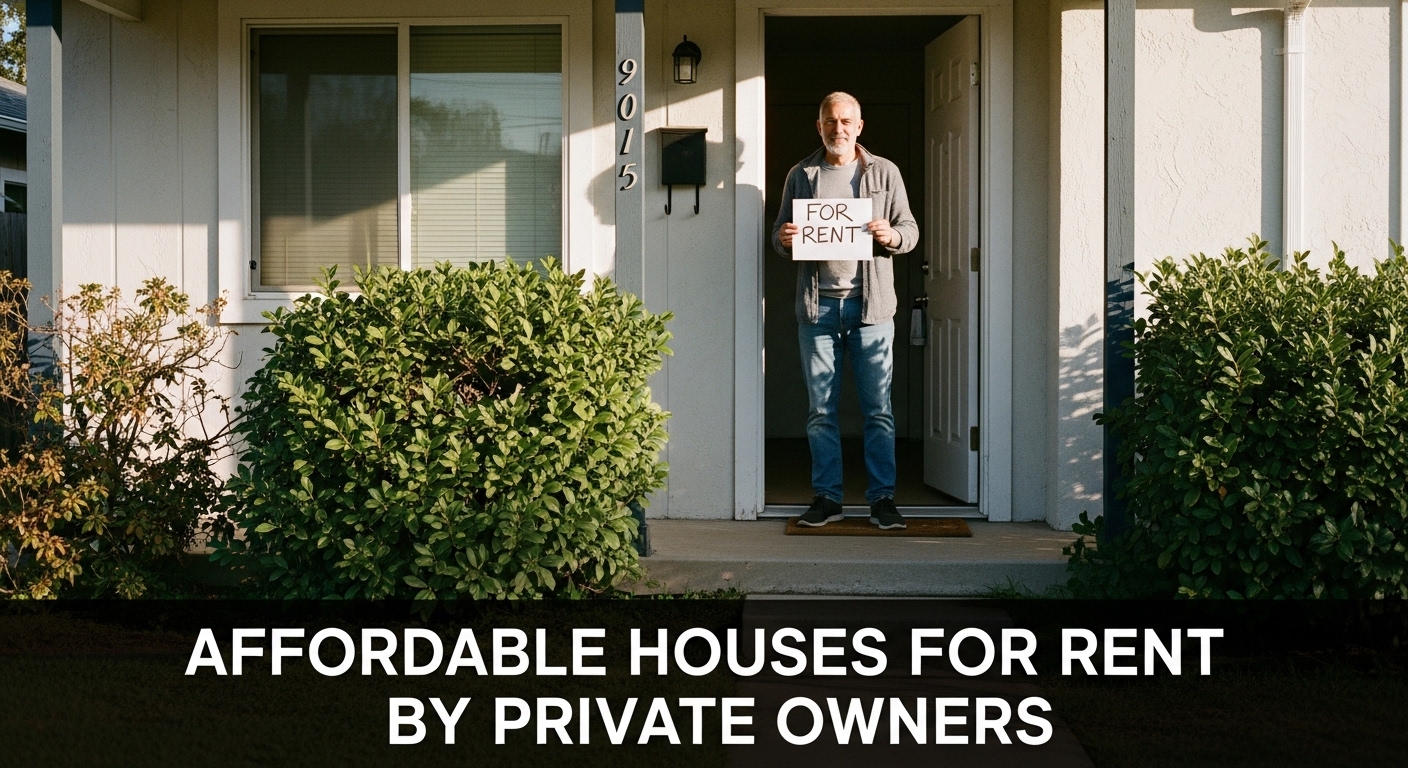
Affordable Houses for Rent by Private Owners: A Smarter Guide for Renters
Can you really find affordable houses for rent by private owners? Yes. You can, if you search with care, check each listing, and compare the full monthly cost instead of rent alone. A low advertised price can hide bigger deposits, utility bills, parking costs, or scam risk. This guide explains how to find good options, protect yourself, and compare homes in a clear way, with extra context for renters searching in San Diego County. The Federal Trade Commission says reported rental-scam losses have reached about $65 million since 2020, which shows why a careful process matters as much as a low price.
By the end of this guide, you’ll know how to:
- find houses for rent by private landlords with less wasted time
- check listings and spot common scam signs
- compare the real monthly cost of cheap houses for rent
- prepare a stronger application for low cost rental homes
- think through local tradeoffs for affordable rental houses in San Diego CA
What Are Houses for Rent by Private Landlords and Are They Really More Affordable?
A private-landlord rental means you deal with the owner instead of a large property-management company.
That can help in real ways. Some owners are more flexible about lease terms, pets, or move-in timing. Some also skip extra layers of fees that appear in more formal leasing systems. Still, lower cost is not automatic. A lower monthly rent can become expensive if the deposit is high, utilities are not included, parking costs extra, or the home adds to your commute. California Courts says security deposits in the state are often one to two months’ rent, so renters need to look past the advertised number.
A simple way to think about it:
- A direct owner may offer more flexibility
- A larger operator may offer more standard rules
- The best deal is the one with the lowest full monthly and move-in cost
Where You Can Find for rent by owner homes Without Wasting Time
The best search plan uses more than one source.
If you rely on one website, you may miss good homes or spend too much time sorting weak ones. Start with large rental platforms that let you filter for owner-listed properties. Then add neighborhood groups, local referrals, and street-level searching in the areas you want. Smaller owners do not always market the same way larger managers do, and some of the best options never appear in every place at once.
Best online places to search for private landlord listings
Use broad sources first, but search with intent:
- filter for houses, not all rentals
- use city-specific terms instead of vague local phrases
- save search versions for different budget bands
- compare the same address across sites for price and contact details
The FTC warns that scammers often copy real listings, switch the contact details, and post them again elsewhere.
Offline ways to find direct landlord rentals
Offline searching still helps more than many renters expect.
Try:
- driving target neighborhoods and watching for yard signs
- asking friends, coworkers, and local community groups
- checking bulletin boards in local businesses or community spaces
- talking to people who already live in the area you want
Smaller owners sometimes use simple, low-cost ways to advertise, especially when they only have one home to rent.
How to search for single family homes for rent by owner instead of apartments
If you want a house, search like someone who wants a house.
Use filters and search terms that narrow results by:
- home type
- yard or outdoor space
- parking or garage needs
- pet rules
- school or commute needs
That keeps apartment listings from taking over your search and helps you compare homes that fit your daily life.
How to Verify private owner rental homes and Avoid Scams
The safest renters check every listing before they act.
The FTC advises renters to search the address plus the owner or company name, compare listings across sites, and treat mismatched contact details or duplicate listings as warning signs. Never assume a polished ad is real just because the photos look good.
A practical check process looks like this:
- Search the full address online
- Compare photos, price, and description across listings
- Check whether the owner or company name stays the same
- Confirm you are speaking with someone who can show the home
- Review the lease before paying anything large
- Walk away if the deal feels rushed, vague, or oddly cheap
Fast checks before you contact the landlord
Look for these warning signs:
- the rent is far below similar homes nearby
- the photos look repeated elsewhere
- the contact person avoids simple questions
- the ad pushes you to act right away
- the owner says they cannot show the property but still wants money
The FTC says scammers often ask for application fees, deposits, or the first month’s rent before you can verify the home.
What never to pay before you verify the listing
Do not send a deposit, hold fee, or large payment until you verify the property and the person offering it. A real owner may charge an application fee, but you should understand what it covers and who is collecting it. Consumer Financial Protection Bureau materials note that tenant screening reports are common and can affect approval and even deposit terms.
Search online for the rental’s address, plus the name of the property owner or rental company listed.
Questions to ask before signing a lease
Before you commit, ask:
- What utilities are included?
- How quickly are maintenance requests handled?
- What is the pet policy?
- Are parking or storage included?
- How are renewals and rent increases handled?
- What happens if you need to end the lease early?
These questions help you avoid a situation that looks cheap at first but becomes costly or stressful later.
What Is the True Cost of cheap houses for rent Each Month?
A low advertised rent is only the start.
To compare rentals in a fair way, add up the full monthly cost and the full move-in cost. That means rent, utilities, internet, parking, renter’s insurance, commuting, pet charges, and any recurring fees. Then estimate what you need up front: deposit, prorated rent, application fees, utility setup, and moving costs. California Courts says deposits in California are often one to two months’ rent, which can change what affordable means in real life.
A simple formula to compare rentals side by side
Use this formula:
True monthly cost = rent + average utilities + parking + internet + renter’s insurance + pet fees + added commute cost
True move-in cost = deposit + first month or prorated rent + application fees + utility setup + moving expenses
| Cost item | Home A | Home B |
|---|---|---|
| Monthly rent | $2,600 | $2,750 |
| Utilities/internet | $250 | $180 |
| Parking | $100 | $0 |
| Renter’s insurance | $20 | $20 |
| Added commute cost | $180 | $60 |
| True monthly cost | $3,150 | $3,010 |
A home with lower rent can still cost more once daily life is included.
Move-in costs that catch renters off guard
Common surprises include:
- large deposits
- pet deposits or pet rent
- utility connection fees
- parking setup
- application fees
- moving truck or storage costs
That is why the best housing decisions are usually made with a simple sheet of numbers, not a listing photo.
What You Need Before Applying for low cost rental homes
The best applicants make the landlord’s decision easier.
Most private owners want to know three things fast: can you pay on time, will you take care of the property, and are you straightforward to work with? The CFPB explains that tenant screening reports can include rental-history and credit-report information, and mistakes in those reports can hurt renters, so it is smart to review your screening-related information before you apply.
A strong prep checklist includes
- government-issued ID
- recent pay stubs or income records
- employer contact information
- previous landlord references
- bank statements if requested
- a short note if credit has issues
- pet details, if needed
- your planned move-in date and lease length
Basic documents every private landlord may ask for
Private owners often want the same core materials larger operators do, just in a less formal package. Having your documents ready helps you move faster and shows that you are reliable.
How to strengthen your application if your credit is average
If your credit is not perfect, you can still improve your chances by:
- showing stable income
- offering strong landlord references
- explaining older issues in a short, honest way
- showing savings and readiness
- being flexible on move-in timing when possible
The goal is not to oversell yourself. The goal is to reduce uncertainty.
How to Contact rental homes with no broker fee Owners
Your first message should feel clear, respectful, and easy to answer.
Smaller owners often decide fast who seems serious. A short, organized message works better than a vague note that only asks if the home is still available.
A simple message template to send a private owner
You can adapt this:
Hello, I’m interested in the property and wanted to see if it is still available. I’m looking to move around 2026, and my household would be [number of people]. I work in [field or job type], have stable income, and can provide references and documents right away. If pets are allowed, I have [brief pet detail]. Please let me know the next step or a good time to view the home.
This works because it answers the owner’s first practical questions without sounding pushy.
What helps private landlords reply faster
Response rates often improve when you:
- share your move-in timeline
- mention stable income
- keep the message short
- show you are ready with documents
- ask one or two specific questions, not ten
That makes you easier to trust and easier to remember.
Should You Choose direct landlord rentals or a Property Manager?
Neither option is always better. The right choice depends on what matters most to you.
Private owners may offer flexibility and a more personal process. Property managers may offer standard rules, formal maintenance systems, and a more predictable application process. The key is matching the setup to your priorities.
| Factor | Private owner | Property manager |
|---|---|---|
| Communication | Often direct and faster | More formal, sometimes slower |
| Flexibility | May be higher | Usually more standardized |
| Fees | Sometimes lower | May be more structured |
| Maintenance | Can vary widely | Often more systemized |
| Screening | Can be flexible | Often stricter and process-driven |
If you want human flexibility, a smaller owner may be a better fit. If you want a more formal system and clear procedures, management may feel safer.
Where You Can Find affordable rental houses in San Diego CA Without Compromising Too Much
San Diego County rewards renters who are realistic about tradeoffs.
In higher-cost coastal neighborhoods, you may pay more for beach access, walkability, and prestige. In some inland or North County areas, you may find more space, easier parking, or a lower monthly cost, but you may trade some convenience, commute time, or closeness to the coast. Adam Kelley Real Estate focuses on local guidance across San Diego, North County, Carlsbad, and nearby communities, which is the kind of local context national rental guides often miss.
What usually affects rental value most in San Diego County
The biggest factors are:
- distance to the coast
- commute routes
- parking availability
- school priorities
- home size and lot size
- renovation level and age of the home
How to replace vague local phrasing with smarter local searching
Instead of broad local wording, search with specific city names and neighborhoods:
That gives you cleaner results and a better sense of which areas are worth your time.
If you are relocating and trying to compare neighborhoods instead of just listings, local guidance can save time by helping you narrow the right areas before you apply.
When Renting Still Makes Sense and When to Start Planning to Buy
Renting is still the better move when flexibility matters more than ownership.
If you are new to the area, unsure about your job timeline, or still learning which neighborhoods fit your lifestyle, renting can buy time and reduce pressure. If you expect to stay in the same part of San Diego County for several years, have stable finances, and feel stuck with rising rents, it may be worth comparing what buying would look like. Adam Kelley Real Estate is built around helping clients buy, sell, relocate, and invest across San Diego-area markets.
Signs renting is still the better short-term move
Renting often makes sense when:
- you need flexibility
- you recently moved
- you are testing a neighborhood
- your savings priorities are changing
- you are not ready for the responsibilities of ownership
Signs it may be time to compare buying options
It may be time to look at buying when:
- you expect to stay put for years
- your finances are stable
- rent increases feel harder to absorb
- you want more control over the home
- you are already researching neighborhoods in detail
Our Real Estate Guidance: The First Step to Your Big Win
We are not a rental portal, and that is one reason this advice is designed to help you think clearly instead of just pushing listings. Adam Kelley Real Estate helps people buy, sell, relocate, and invest across San Diego County and North County. The site highlights more than 15 years of experience, local coverage from San Diego to Carlsbad, and strong social proof. The contact page lists the office at 2710 Loker Ave W Suite 370, Carlsbad, CA 92010 and phone (760) 888-6491. The site also lists DRE# 01905780 and Brokered by Elevate Capital DRE#2189403. For renters, that matters because local market knowledge can help you judge neighborhood value, commute tradeoffs, and when it may make sense to keep renting or plan your next move.
What is a private landlord?
A private landlord is an individual owner, or sometimes a very small owner-run operation, renting out a home directly instead of using a large property-management company. In day-to-day terms, that usually means you communicate more directly with the person making decisions about rent, repairs, pets, and lease timing. For renters, that can be helpful because the process may feel more personal and more flexible.
Still, private landlords vary more. Some are organized and responsive. Others may have looser systems, slower maintenance, or less consistent paperwork. The benefit is not that private always means better. The real benefit is that you may get a better fit if the owner is legitimate, communicative, and clear.
How do I find private landlords?
The best way is to combine online filters with local searching. Start with major rental sites that allow owner-listed properties, then add community groups, referrals, and neighborhood-level searching. You can also search addresses you like and see whether the same home appears in multiple places with matching details.
A strong search process looks like this:
- start broad with owner-friendly rental filters
- narrow to houses and your target budget
- search by city name, not just region
- ask local contacts about upcoming rentals
- watch for yard signs in target neighborhoods
This works better than relying on one portal because smaller owners do not always market the same way larger companies do.
Is it cheaper to rent from a private landlord?
Sometimes, yes, but not always. A private owner may have fewer fees, more flexibility, or a simpler approval process. That can make the deal less expensive overall. A lower rent number does not guarantee a better value if the deposit is large, utilities are high, or the location adds major commuting costs.
The smartest way to compare is to look at:
- full monthly cost
- full move-in cost
- lease flexibility
- maintenance expectations
- time and money saved or lost from the location
When you compare that way, you make better decisions than renters who focus only on the list price.
Can I negotiate the rental terms with an independent landlord?
Often, yes, at least more easily than with a large management company. Smaller owners may be willing to discuss move-in timing, lease length, pet terms, small fee issues, or how they handle maintenance expectations. Negotiation works best when you are respectful, realistic, and clearly qualified.
What may be worth discussing:
- move-in date
- lease term length
- pet policy details
- minor fees
- whether landscaping or small maintenance tasks are included
The best position usually comes from being organized, financially ready, and easy to work with.
How do I avoid rental scams when renting from a private owner?
Start by assuming every listing needs verification. Search the address online, compare it across multiple sites, and look for mismatched photos, pricing, or contact details. The FTC warns that scammers often copy real listings and replace the real contact information with false details.
Then follow three simple rules:
- do not pay large sums before verifying the home
- do not treat urgency as proof
- do not ignore inconsistencies just because the price looks great
If the person cannot show the home, cannot explain basic property details, or pushes you to pay first and ask questions later, move on.
What documents do I need to rent from a private landlord?
Most renters should be ready with:
- photo ID
- proof of income
- pay stubs or job letter
- previous landlord references
- basic financial documents if requested
- pet information if needed
- a short explanation for credit issues, if needed
Because many landlords use tenant screening reports, it is smart to review the information that could affect your application. The CFPB says screening reports can include rental-history and credit-related information, and errors can create problems for renters.
The more prepared you are, the easier it is for an owner to say yes.
What should I ask a private owner before I sign the lease?
Ask about both cost and daily-life expectations. You want to know what is included, how problems get fixed, and what flexibility exists before you commit.
Ask about:
- utilities
- maintenance response times
- parking
- pet rules
- guests
- lease renewal terms
- early move-out rules
- rent increase practices
A good lease conversation cuts surprises and helps you compare homes in a more accurate way.
How can I tell if a rent-by-owner listing is too good to be true?
The classic warning sign is a price that feels much lower than similar homes nearby. That can happen in real life once in a while, but it is often a red flag when paired with urgency, vague answers, or pressure to pay before you verify the property.
Warning signs include:
- too-low rent
- poor or repeated photos
- different contact details across sites
- pressure to pay right away
- refusal to show the property
- a lease or payment process that feels improvised
When several red flags show up together, trust the pattern, not the promise.
What areas around San Diego, CA may offer better value for renters?
In general, renters often find better value when they move a little farther from premium coastal neighborhoods and focus on the tradeoff that matters most to them, such as space, parking, commute, schools, or overall monthly cost. The exact best value depends on your job, lifestyle, and tolerance for commuting.
A practical way to compare:
- coastal premium areas
- inland neighborhoods
- North County options
- commute-heavy but larger-home options
Value is rarely just about lower rent. It is about the best mix of cost, convenience, and fit for your life.
When does it make more sense to buy instead of keep renting in San Diego?
It usually becomes more reasonable to compare buying when you expect to stay in the same area for several years, your finances are stable, and you are tired of rent increases or limited control over your living situation. Renting still makes sense when flexibility matters more, especially during a relocation or transition period.
A simple test is to ask:
- am I likely to stay here for years?
- do I know which neighborhood fits me?
- are my finances steady enough for ownership?
- do I want more control over my home?
If the answers are increasingly yes, it may be time to compare ownership options instead of assuming renting is your only practical path.
Final Thoughts
Finding affordable houses for rent by private owners is possible, but the best results usually come from a smarter process, not a faster one. Search in layers, verify every listing, compare the full monthly cost, and prepare your documents before you start reaching out. If you are trying to compare neighborhoods, relocating within San Diego County, or deciding whether it makes more sense to keep renting or start planning to buy, contact Adam Kelley Real Estate for local guidance. You can reach the team at (760) 888-6491 or visit the office at 2710 Loker Ave W Suite 370, Carlsbad, CA 92010.

Adam Kelley
Recent Posts

How to Find Investment Properties in San Diego
Private Landlord vs. Property Manager: Which Approach Fits Your Rental