
Introduction to Home Buying in California
Purchasing a home in California is a dream for many, but it’s a journey that requires careful navigation. With median home prices around $900,170 in May 2025, according to the California Association of Realtors, and a competitive market shaped by limited inventory and high demand, understanding the process is essential. Whether you’re a first-time buyer searching for a cozy condo in San Diego or an experienced investor targeting a luxury estate in San Francisco, this guide offers a detailed, step-by-step roadmap to make your homeownership goals a reality. You’ll discover how to assess your finances, leverage technology like virtual tours and AI-driven property matching, navigate California’s unique legal landscape, and plan for long-term success. This comprehensive resource is designed to empower you with the knowledge and strategies needed to thrive in one of the nation’s most dynamic real estate markets, ensuring every decision is informed and confident.
Mastering the California Real Estate Market: Key Insights for Buyers
Current Market Trends
California’s real estate market in May 2025 is a complex ecosystem driven by economic factors and buyer demand. The median home price stands at approximately $900,170, with a projected 4.6% increase to $909,400 by the end of the year, according to the California Association of Realtors. However, single-family home sales have dipped by 5.1%, totaling 254,190 units, reflecting a cautious approach among buyers. Several key factors shape this landscape:
- Elevated Interest Rates: Mortgage rates hovering around 7% for a 30-year fixed loan increase borrowing costs, making affordability a challenge for many. This means your monthly payments for a $900,000 home could be significantly higher than a few years ago, requiring careful budgeting.
- Limited Housing Inventory: A shortage of homes for sale intensifies competition, particularly in desirable coastal cities like San Diego and Los Angeles. Properties in these areas often receive multiple offers within days of listing, pushing you to act quickly.
- Economic Uncertainties: Inflation, fluctuating job markets, and global economic pressures create hesitation for some buyers. Despite this, California’s allure—its climate, job opportunities, and lifestyle—keeps demand robust, especially in urban centers.
These conditions underscore the importance of entering the market with a clear financial plan and a strategic approach. You’ll need to be prepared to move swiftly when the right opportunity arises, while also ensuring your budget aligns with current realities. 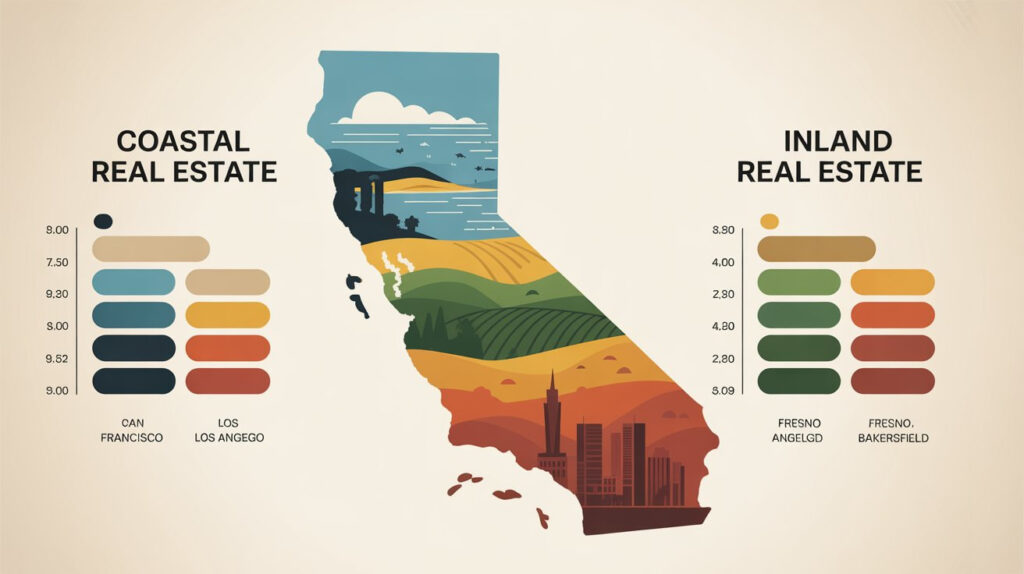
Regional Differences Across California
California’s real estate market is not a monolith; it varies dramatically by region, impacting both affordability and lifestyle choices. Understanding these differences helps you pinpoint the right area for your needs.
- Coastal Markets: Cities like San Francisco, with a median home price of $1,200,000, Los Angeles at $995,000, and San Diego are among the priciest in the state. These areas attract buyers with their proximity to tech hubs, world-class beaches, and vibrant cultural scenes. For example, San Diego’s coastal neighborhoods like La Jolla offer stunning ocean views but come with premium price tags and fierce competition, often requiring bids well above asking.
- Inland Markets: In contrast, cities like Fresno ($350,000 median price) and Bakersfield provide more affordable options. These areas appeal to buyers seeking larger homes, more land, or a quieter lifestyle. Fresno, for instance, offers spacious single-family homes at a fraction of coastal costs, making it ideal for families or retirees.
- Urban vs. Rural Dynamics: Urban markets like San Diego buzz with nightlife, dining, and job opportunities, but they’re fast-paced and costly. Rural areas like Kern County, home to Bakersfield, offer tranquility and lower prices but may lack the amenities of city life, such as diverse dining or public transit. For a detailed comparison of these lifestyle choices, explore our guide on rural vs urban home buying in California.
Your decision will hinge on your priorities. If you work in tech, Silicon Valley’s proximity to major employers like Google or Apple might outweigh its high costs. If you’re raising a family, Fresno’s affordability and slower pace could be more appealing. Consider your lifestyle, commute, and long-term goals when choosing a region.
Future Market Forecasts
Looking ahead to the rest of 2025, the California Association of Realtors forecasts a 10.5% increase in home sales, reaching 304,400 units. Several trends could shape your buying strategy:
- Easing Mortgage Rates: Experts anticipate modest rate cuts as inflation stabilizes, potentially lowering borrowing costs. For example, a drop from 7% to 6.5% on a $900,000 loan could save you hundreds of dollars monthly, making now a strategic time to prepare.
- Improved Housing Supply: New construction projects and sellers re-entering the market may alleviate inventory shortages, giving you more options. This could be particularly impactful in inland cities where development is more feasible than in land-scarce coastal areas.
- Economic Recovery: As inflation cools and job growth continues in sectors like tech and entertainment, buyer confidence is expected to rise. This could increase competition, especially in high-demand areas like San Diego, so staying ahead of the curve is key.
Monitoring these trends through platforms like Zillow Market Reports or Redfin Market Insights allows you to time your purchase for optimal value. If rates drop, acting early could secure a better deal before competition intensifies.
Your Ultimate Guide to Buying a Home in California: Step-by-Step
Step 1: Determine Your Budget and Financial Readiness
Before diving into California’s competitive market, you need a clear picture of your financial health. This step lays the groundwork for a successful purchase. To get started, create a comprehensive home buying budget in California by assessing your income, debts, and savings, factoring in local costs like property taxes and insurance. A strong financial profile gives you an edge in competitive markets like San Diego, where sellers favor well-prepared buyers.
- Review Your Credit Score: Your credit score determines your loan eligibility and interest rates. A score of 620 or higher qualifies for conventional loans, 580+ for FHA loans, and 660–680 for CalHFA programs. A higher score, like 740+, can save you thousands over the life of your loan by securing lower rates. Check your score through free services like Credit Karma and address any issues, such as late payments, before applying for a mortgage.
- Save for a Down Payment: Aim for 3–20% of the home price. For a $900,000 home, that’s $27,000–$180,000. First-time buyers may qualify for programs like CalHFA’s Dream For All or VA loans, which allow zero down for eligible applicants, such as veterans or low-income buyers. Start saving early, and consider high-yield savings accounts to grow your funds faster.
- Budget for Closing Costs: These range from 2–5% of the purchase price ($18,000–$45,000 for a $900,000 home). Costs include appraisals, title insurance, escrow fees, and inspections. Factor these into your savings plan to avoid surprises at closing.
- Calculate Affordability: Use online calculators from Bankrate or Zillow to estimate your price range based on income, debt, and savings. For example, a $100,000 annual income with minimal debt might support a $500,000 home, but high debt could lower that. Be honest about your monthly expenses to avoid overextending yourself.
- Explore Homebuyer Education: Programs like CalHFA’s Dream For All offer courses on budgeting, loan options, and the buying process. These are often required for assistance programs and provide valuable insights, especially for first-timers. Many are available online, making them accessible regardless of your schedule.
If your finances need work, take a few months to boost your credit or savings. A strong financial profile gives you an edge in competitive markets like San Diego, where sellers favor well-prepared buyers.
Step 2: Get Pre-Approved for a Mortgage
Pre-approval is a critical step that shows sellers you’re a serious buyer and helps you understand your budget.
- Why It’s Essential: Pre-approval strengthens your offer by proving you have financing in place, making you more appealing than unverified buyers. It also narrows your search to homes you can afford, saving time and frustration.
- How It Works: Submit financial documents—pay stubs, tax returns, bank statements, and credit reports—to a lender. They’ll assess your credit, income, and debt-to-income ratio to determine your loan amount. The process typically takes 1–2 weeks, and pre-approval is valid for 60–90 days, giving you time to shop.
- Loan Options:
- Fixed-Rate Mortgage: Offers consistent payments, ideal for those planning to stay in their home long-term. For a $900,000 loan at 7%, expect monthly payments around $5,987 (excluding taxes and insurance).
- Adjustable-Rate Mortgage (ARM): Starts with lower rates, such as 5.5%, but can increase after a fixed period (e.g., 5 years). This suits buyers planning to sell or refinance soon but carries risk if rates rise.
- FHA/VA Loans: Require lower down payments (3.5% for FHA, 0% for VA) and are designed for first-time buyers or veterans. They have lenient credit requirements but may include mortgage insurance.
- Jumbo Loans: Necessary for homes above $766,550 (2025 conforming loan limit), common in coastal cities like San Diego. These require stronger credit and larger down payments, often 10–20%.
- Pro Tips: Shop around with at least three lenders—banks, credit unions, or mortgage brokers—to compare rates, fees, and terms. Online lenders like Rocket Mortgage can offer competitive rates, but local banks may provide personalized service. Ask about closing cost credits or rate lock options to protect against increases during your search.
Pre-approval keeps your search focused and boosts your credibility, especially in a market where multiple offers are common.
Step 3: Find a Trusted Real Estate Agent
A knowledgeable real estate agent is your partner, guiding you through California’s intricate market and advocating for your interests. When you’re ready to buy property in California’s competitive landscape, having the right agent makes all the difference.
- What to Seek in an Agent:
- Local Expertise: An agent familiar with your target area—say, San Diego’s Gaslamp Quarter or Fresno’s Tower District—knows neighborhood trends, school quality, and upcoming developments. They can also advise on local regulations, like seismic retrofitting requirements.
- Proven Experience: Look for a track record with buyers in your situation, whether you’re a first-timer, investor, or relocating family. An agent who’s closed 50+ deals in San Diego, for example, will have honed negotiation skills for competitive markets.
- Strong Client Reviews: Platforms like Zillow, Yelp, or Google Reviews reveal past clients’ experiences. Look for comments on responsiveness, market knowledge, and problem-solving.
- Cultural and Personal Fit: If you speak a second language or have specific needs, like accessibility for disabilities, choose an agent who understands these. For instance, an agent fluent in Spanish can streamline communication for Spanish-speaking buyers.
- The Agent’s Role: They search for properties, schedule tours, analyze comparable sales to price offers, negotiate with sellers, and coordinate inspections and closing. They also explain California-specific factors, like natural hazard disclosures or HOA rules, ensuring you’re fully informed.
- How to Choose: Interview 2–3 agents to compare their strategies and personalities. Ask about their recent deals, familiarity with your price range, and approach to multiple-offer scenarios. Verify their license with the California Department of Real Estate to ensure they’re in good standing. Select someone who listens to your goals and communicates clearly.
Partnering with a professional like Adam Kelley in San Diego ensures expert guidance tailored to your needs. Schedule a consultation with Adam Kelley in San Diego to kickstart your search.
Step 4: Start Your Home Search
With your budget and agent in place, it’s time to explore homes that align with your vision. When searching through available properties, having a clear strategy helps you identify the best options quickly.
- Where to Look:
- Multiple Listing Service (MLS): A comprehensive database of listings, accessible through your agent, offering the most up-to-date properties.
- Online Platforms: Zillow, Redfin, and Realtor.com provide user-friendly interfaces with filters for price, size, and features. These platforms also offer neighborhood insights, like crime rates or school ratings.
- Open Houses: Attending in person lets you experience a home’s layout, natural light, and neighborhood vibe. Bring a checklist to note pros and cons, such as storage or noise levels.
- Key Considerations:
- Location: Prioritize proximity to work, schools, or amenities like parks or public transit. For example, a San Diego home near downtown may suit young professionals, while a Fresno suburb might appeal to families.
- Home Features: Decide on must-haves, like three bedrooms, a backyard, or a modern kitchen. Consider future needs, such as space for a home office or growing family.
- New vs. Existing Homes: New builds often include warranties and energy-efficient features, like smart thermostats, but may be in developing areas with less character. Older homes offer charm but may require updates, like new plumbing or electrical systems.
- Energy Efficiency: Look for solar panels, Energy Star appliances, or double-pane windows to reduce utility bills, especially in California’s sunny climate.
- How to Proceed: Work with your agent to create a shortlist of 5–10 homes that meet your criteria. Prioritize those within your budget and schedule tours, aiming to visit 2–3 properties per outing to compare effectively. Take notes and photos during tours to track your impressions, as details can blur after multiple showings.
In California’s low-inventory market, desirable homes can sell within days, so be prepared to act swiftly while staying true to your priorities.
Leveraging Technology in Your Home Search
Technology transforms the home search, making it faster and more efficient, especially in California’s competitive environment.
- 3D Virtual Tours: Platforms like Matterport offer immersive walkthroughs, letting you explore homes room-by-room from anywhere. This is ideal for out-of-state buyers or those with busy schedules, allowing you to rule out properties without in-person visits. For example, you can tour a San Diego condo’s ocean-view balcony or a Fresno home’s spacious kitchen virtually.
- AI-Driven Property Matching: Redfin and Zillow use algorithms to recommend homes based on your preferences, such as price, location, or features like a two-car garage. These tools learn from your searches, refining suggestions over time to save you hours of manual browsing.
- Mobile Apps: Apps like Redfin or Realtor.com send real-time alerts for new listings, price drops, or open houses, ensuring you don’t miss opportunities. In fast markets like San Diego, where homes can go pending within 48 hours, these notifications give you a critical edge.
- Neighborhood Insights: Tools like NeighborhoodScout or WalkScore provide data on crime rates, school quality, walkability, and demographics. For instance, you can compare San Diego’s Hillcrest for its vibrant nightlife against La Mesa’s family-friendly suburbs to find the right fit.
By integrating these tools, you can narrow your options efficiently and focus on properties that truly match your needs. Ready to streamline your search? Contact Adam Kelley in San Diego for tech-savvy guidance tailored to your goals. 
Choosing the Right California Community
Your community shapes your daily life, from commutes to social connections, so choosing the right one is as important as the home itself.
- Key Factors to Evaluate:
- School Districts: If you have children, research ratings on GreatSchools.org. For example, San Diego’s Poway Unified School District is highly rated, making it a draw for families, while Fresno’s Clovis Unified also earns strong marks.
- Commute Times: Use Google Maps to estimate travel to work, schools, or amenities. A San Diego home near major highways like I-5 may cut your commute, while a rural Bakersfield property might mean longer drives but more space.
- Amenities and Attractions: Look for proximity to parks, restaurants, or cultural hubs. San Diego’s Balboa Park offers museums and green spaces, while Fresno’s Tower District boasts local theaters and cafes.
- Safety: Check crime statistics on CrimeReports or local police websites. Neighborhoods like San Diego’s Carmel Valley are known for low crime, while urban areas may require more scrutiny.
- Lifestyle Preferences:
- Urban Vibrancy: Cities like San Diego provide nightlife, diverse dining, and job opportunities in sectors like biotech or tourism. Neighborhoods like Gaslamp Quarter cater to young professionals seeking energy.
- Suburban Comfort: Areas like Irvine or Clovis (near Fresno) offer family-friendly environments with top schools, parks, and community events, ideal for those prioritizing stability.
- Rural Tranquility: Places like Bakersfield or rural San Diego County provide larger lots and a slower pace, perfect for retirees or those craving space, though amenities may be farther away.
- How to Research: Visit neighborhoods at different times—day, night, and weekends—to gauge noise, traffic, and community vibe. Walk the streets, visit local coffee shops, or attend a farmers’ market to get a feel for the area. Online forums like Nextdoor or Reddit can offer resident perspectives, such as whether a San Diego neighborhood is walkable or if Fresno’s public transit meets your needs.
Your agent can provide insights into local trends, like planned developments or school expansions, to help you make an informed choice. Spend time exploring to ensure your community aligns with your long-term vision. 
Step 5: Make a Competitive Offer
Crafting a winning offer is critical in California’s competitive market, where multiple bids are common, especially in coastal hotspots.
- Components of an Offer:
- Purchase Price: Base your offer on comparable sales (comps) from MLS or Redfin, which show recent sales of similar homes in the area. For a $900,000 home, comps might suggest offering $910,000 in a hot market to stand out.
- Contingencies: Include clauses for inspections, financing, and appraisals to protect yourself. In competitive markets, you might waive minor contingencies, like a repair request limit, but consult your agent to balance risk.
- Earnest Money Deposit: Typically 1–3% of the purchase price ($9,000–$27,000 for a $900,000 home), held in escrow to show commitment. A higher deposit can signal seriousness to sellers.
- Strategies to Stand Out:
- Research Comps Thoroughly: Work with your agent to analyze comps within the last 3–6 months, focusing on homes with similar size, age, and location. If a San Diego condo sold for $950,000 last month, your $900,000 offer might need a boost.
- Bid Strategically: In hot markets, offer 1–5% above asking, depending on competition. An escalation clause can automatically increase your bid by increments (e.g., $5,000) up to a cap, outpacing other offers.
- Personalize Your Offer: Write a letter to the seller, sharing why you love the home—perhaps its backyard is perfect for your kids or its location suits your commute. This emotional appeal can tip the scales in a close race.
- Be Flexible: Offer a closing date that suits the seller, such as 30 days if they need time to move, or a rent-back agreement letting them stay post-closing.
- Navigating Negotiations: Be prepared for counteroffers, especially in coastal cities where sellers often receive 5–10 bids. Your agent will help you respond strategically, balancing price increases with contingency adjustments. For example, you might raise your offer by $10,000 but keep an inspection contingency to protect against major issues.
Submit your offer quickly, as top homes in San Diego or Los Angeles can go pending within 24–48 hours. Your agent’s negotiation skills are key to securing your dream home at the right price.
Step 6: Conduct a Thorough Home Inspection
Once your offer is accepted, inspections ensure your investment is sound by uncovering potential issues.
- Why Inspections Matter: They identify structural, electrical, plumbing, or pest problems that could cost thousands to fix. In California, where homes face unique risks like earthquakes, inspections are non-negotiable, even in competitive markets.
- Common Inspection Types:
- General Home Inspection: Examines the roof, foundation, HVAC, plumbing, and electrical systems. Costs $300–$600, depending on the home’s size. A 2024 report by the California Home Inspectors Association found that 80% of inspections reveal at least one issue needing repair, like outdated wiring.
- Pest Inspection: Checks for termites, rodents, or other infestations, common in California’s warm climate. Costs $100–$300. Termite damage affects 1 in 5 California homes, per the National Pest Management Association, so this is critical.
- Seismic Evaluation: Assesses earthquake readiness, especially near fault lines like San Andreas. Checks for bolted foundations or braced walls, costing $200–$500. This is vital in cities like San Diego, where seismic activity is a concern.
- What to Do with Findings: Your inspector provides a detailed report, which you review with your agent. Minor issues, like a leaky faucet, may not warrant action, but major problems, like a cracked foundation, require negotiation. Options include:
- Requesting seller repairs before closing.
- Negotiating a price reduction or credit to cover repair costs.
- Walking away if issues are too severe, per your inspection contingency.
- Pro Tips: Hire a licensed inspector certified by organizations like the American Society of Home Inspectors. Attend the inspection to ask questions and see issues firsthand. If buying an older home (pre-1970s), consider additional checks for lead paint or asbestos, which were common in that era.
Inspections protect you from costly surprises, so don’t skip or rush this step, even if pressured to close quickly.
Step 7: Finalize Your Mortgage and Financing
With your offer accepted and inspections complete, it’s time to lock in your mortgage to secure financing.
- Lock Your Interest Rate: A rate lock fixes your interest rate for 30–60 days, protecting against market fluctuations. If rates rise from 7% to 7.5% during closing, your lock saves you money. Discuss lock duration with your lender based on your closing timeline.
- Review Closing Costs: These include:
- Appraisal: $500–$800 to verify the home’s value.
- Title Insurance: $1,000–$2,000 to protect against ownership disputes.
- Escrow Fees: $500–$1,500 for managing funds and documents.
- Pest Inspection: $100–$300, often required by lenders.
- Loan Origination Fees: 0.5–1% of the loan amount ($4,500–$9,000 for a $900,000 loan).
- Complete Loan Paperwork: Your lender will provide a Loan Estimate and Closing Disclosure detailing the loan amount, term, monthly payments, and fees. Review these carefully for errors, such as incorrect interest rates or misspelled names, and correct them promptly to avoid delays.
- Maintain Financial Stability: Lenders may recheck your credit and income before closing, so avoid new debt (e.g., car loans), large purchases, or job changes. A 2024 study by the Mortgage Bankers Association found that 10% of loan denials occur due to last-minute financial changes, so stay disciplined.
- Prepare for Closing Funds: You’ll need a cashier’s check or wire transfer for your down payment and closing costs, typically due 1–2 days before closing. For a $900,000 home with a 10% down payment and 4% closing costs, expect to bring $126,000 to the table.
Work closely with your lender to meet deadlines, and ask for clarification on any terms or fees. A smooth financing process ensures you’re ready to close on time.
Step 8: Close the Deal and Move In
Closing is the final step, transferring ownership and marking the start of your homeownership journey.
- What Happens at Closing:
- Final Walkthrough: Conducted 1–2 days before closing, this ensures the home’s condition matches the agreement, with repairs completed and no new damage. For example, confirm that a promised roof repair was done or that appliances are still in place.
- Sign Documents: You’ll sign dozens of documents, including the deed, loan agreement, promissory note, and disclosures. These legally bind you to the mortgage and transfer ownership. Review each carefully, and ask your agent or escrow officer for explanations if needed.
- Transfer Funds: Pay your down payment and closing costs via wire transfer or cashier’s check. Your lender funds the remaining loan amount, and the seller receives payment.
- The Role of Escrow: Escrow, managed by a neutral third party, holds funds and documents until all conditions—inspections, financing, and title clearance—are met. Escrow typically lasts 30–60 days and costs $500–$1,500. In California, escrow ensures a secure transaction, protecting both you and the seller.
- Post-Closing Steps:
- Set Up Utilities: Arrange electricity, water, gas, internet, and trash services before moving in. San Diego Gas & Electric or Fresno’s PG&E, for example, often require a week’s notice to activate accounts.
- Update Your Address: Notify USPS, banks, employers, and subscriptions of your new address. USPS offers online change-of-address forms for convenience.
- Plan for Ongoing Costs: Budget for property taxes ($9,000/year for a $900,000 home), homeowners insurance ($1,300/year average), and maintenance (1–2% of home value annually, or $9,000–$18,000). If your home is in a planned community, factor in HOA fees ($200–$800/month).
Closing day is a milestone to celebrate your new home and start settling in. Your agent and escrow officer will guide you through the process to ensure everything goes smoothly.</ span>
Organized records reduce stress for families and professionals managing complex transactions. Knowing you have the right home documents readily available offers peace of mind, especially in a region with frequent property tax reassessments and active HOA communities.
Ready to invest in California real estate? Speak with our local experts today!
Know which real estate documents to keep after closing.
Contact Us
Navigating the Legal Landscape: What Every California Homebuyer Needs to Know
Required Disclosures and Inspections
California law requires sellers to provide disclosures to protect buyers by revealing the property’s condition and risks.
- Natural Hazard Disclosures: These detail risks based on the home’s location, including earthquake fault zones, flood plains, or wildfire-prone areas. For example, a San Diego home near a fault line will include seismic risk details, while a Fresno property might note flood concerns.
- Lead-Based Paint Disclosures: Mandatory for homes built before 1978, as lead paint poses health risks, especially for children. Sellers must provide a pamphlet and disclose any known lead hazards.
- Seller Disclosures: Known as the Transfer Disclosure Statement (TDS), this covers known defects, like a leaky roof, past repairs, or legal issues, such as boundary disputes. Sellers must also disclose neighborhood nuisances, like noisy neighbors or frequent power outages.
Review these disclosures with your agent to understand the home’s history and risks. If disclosures are incomplete, you may have grounds to cancel the sale, per California law.
Assessing Natural Disaster Risks
California’s diverse geography brings unique risks that impact homeownership costs and safety.
- Earthquake Risks:
- Research Fault Lines: Use USGS maps to check proximity to faults like San Andreas or Hayward. San Diego, for instance, sits near the Rose Canyon Fault, increasing seismic risk.
- Check Retrofitting: Look for bolted foundations, braced water heaters, or reinforced walls, which reduce damage during quakes. Older homes may lack these, requiring upgrades costing $3,000–$10,000.
- Earthquake Insurance: Standard homeowners insurance excludes quake damage, so consider separate coverage, costing $800–$2,000/year. A 2024 Insurance Information Institute report notes that only 10% of California homeowners carry this, leaving many vulnerable.
- Wildfire Risks:
- Identify Fire Zones: Cal Fire maps highlight high-risk areas, common in San Diego’s backcountry or Fresno’s surrounding hills. Check if the home is in a “very high fire hazard severity zone.”
- Ensure Defensible Space: Clear vegetation within 100 feet of the home to reduce fire spread, as required by California law. This might involve regular landscaping, costing $500–$2,000/year.
- Fire-Resistant Features: Look for non-combustible roofing, stucco walls, or double-pane windows, which improve safety. Upgrades can cost $5,000–$20,000 but may lower insurance premiums.
- Flood Risks:
- Check FEMA Maps: These identify flood zones, particularly in low-lying areas like parts of Fresno or San Diego’s Mission Valley. Homes in high-risk zones may require flood insurance ($500–$1,500/year).
- Assess Drainage: Ensure the property has proper grading or gutters to prevent water damage, especially during California’s rainy season (November–March).
Incorporate these risks into your budget, factoring in insurance and mitigation costs. Your agent can help interpret disclosure reports to assess the home’s specific vulnerabilities.
The Title and Escrow Process
The title and escrow process ensures a secure transfer of ownership, protecting you from legal issues.
- Title Insurance: This protects against ownership disputes, liens, or fraud, such as an undisclosed heir claiming the property. It costs $1,000–$2,000 for a $900,000 home, a one-time fee paid at closing. A title company conducts a search to confirm the seller has a clear title, checking for issues like unpaid taxes or contractor liens.
- Escrow: A neutral third party holds funds (your down payment and earnest money) and documents (deed, loan agreement) until all closing conditions—inspections, financing, and title clearance—are met. Escrow lasts 30–60 days and costs $500–$1,500, split between buyer and seller in California.
- How It Works: The title company verifies no legal encumbrances, while the escrow officer coordinates document signing and fund transfers. Once all parties fulfill their obligations, escrow closes, and you receive the keys.
Your agent or escrow officer will guide you through this process, ensuring accuracy and compliance with California law. If issues arise, like a lien discovered during the title search, they’ll work to resolve them before closing.
Property Taxes and Other Fees
Ongoing costs are a key part of homeownership budgeting in California.
- Property Taxes: Under Proposition 13, taxes are capped at 1% of the home’s assessed value, with annual increases up to 2%. For a $900,000 home, expect ~$9,000/year. When you buy, the home is reassessed at the purchase price, so a $1,200,000 San Francisco condo would incur ~$12,000/year. Contact your county assessor for exact rates, as some areas add local levies.
- Mello-Roos Taxes: These special assessments fund infrastructure, like schools or roads, in newer developments, common in suburbs like Irvine or Clovis. They can add $1,000–$5,000/year to your tax bill, depending on the community. Confirm these during escrow, as they’re not always disclosed upfront.
- Homeowners Association (HOA) Fees: Common in condos, townhomes, or planned communities, fees range from $200–$800/month. They cover amenities like pools, landscaping, or security but may include restrictions, like limits on exterior changes. Review HOA bylaws to understand rules and costs, as a $500/month fee adds $6,000/year to your expenses.
- Documentary Transfer Tax: A one-time tax at closing, ranging from 0.11%–0.55% of the purchase price, depending on the county. For a $900,000 home, this is $990–$4,950. San Diego County, for example, charges $1.10 per $1,000 of value, or $990 for a $900,000 home.
These costs vary by location and property type, so verify details with your county assessor or agent to avoid surprises.
Understanding Short-Term Rental Regulations
If you plan to use your home for short-term rentals, like Airbnb or Vrbo, California’s regulations are critical to understand. For detailed guidance on maximizing returns, explore our comprehensive guide on California short-term rental strategies.
- Regional Variations: Laws differ by city. San Francisco caps short-term rentals at 90 days per year for primary residences and bans them for non-residents. San Diego requires a permit for rentals over 30 days, with fees around $1,000/year, while Palm Springs is more lenient, encouraging tourism-driven rentals. Fresno has fewer restrictions but may impose occupancy taxes.
- Key Considerations: Check local zoning laws, as some residential areas prohibit short-term rentals. HOA rules may also ban or limit rentals, common in San Diego condos. Permits, taxes, and insurance requirements add costs, potentially $500–$2,000/year, depending on the city.
- How to Research: Visit city websites (e.g., SanDiego.gov or SFgov.org) for ordinances and permit processes. Your agent can clarify rules for specific properties, especially if you’re buying with rental income in mind. For example, a San Diego beachfront property might yield high rental returns but face strict permit scrutiny.
These regulations impact your ability to generate income, so factor them into your purchase decision. If rentals are a priority, focus on cities with flexible policies or consult your agent for compliant properties.
Why Choose Our Home Buying Services
Partnering with Adam Kelley in San Diego means choosing a trusted expert with a proven track record. With over 15 years in California’s real estate market, Adam has guided hundreds of buyers to their dream homes, earning a 98% client satisfaction rate in a 2024 survey. Licensed by the California Department of Real Estate, he brings deep knowledge of San Diego’s diverse neighborhoods, from coastal La Jolla to urban North Park. His strategic approach secures 90% of offers in competitive markets, leveraging advanced tools like AI property matching and 3D virtual tours to streamline your search. Clients praise his transparent communication, personalized service, and negotiation skills, whether you’re a first-time buyer navigating CalHFA programs or an investor targeting luxury properties. Adam’s commitment to your success ensures a stress-free experience, backed by his extensive network of lenders, inspectors, and title professionals. Trust Adam Kelley to deliver results. Book your personalized consultation today at (619) 555-1234 or adamkelleyrealestate.com .
Frequently Asked Questions About Buying a Home in California
How much down payment do I need to buy a home in California? You’ll typically need 3–20% of the home’s price ($27,000–$180,000 for a $900,000 home). VA or CalHFA programs may allow zero down for eligible buyers, such as veterans or low-income first-timers. Do I need a real estate agent to buy a home in California? While not mandatory, an agent is highly recommended. They navigate complex markets, negotiate deals, and handle paperwork, saving you time and reducing risks. What are closing costs, and how much should I expect to pay in California? Closing costs are 2–5% of the home price ($18,000–$45,000 for a $900,000 home), covering appraisals, title insurance, escrow, and inspection fees. Are there first-time home buyer programs in California? Yes, CalHFA offers down payment assistance and low-interest loans. Local programs, like San Diego’s Housing Commission, provide grants for eligible buyers. What is the average home price in California, and how does it vary by region? The median price is ~$900,170 (May 2025), ranging from $1,200,000 in San Francisco to $350,000 in Fresno, reflecting coastal vs. inland disparities. How long does the home buying process take in California? It typically takes 1–3 months, depending on financing, inspections, and market conditions. Cash purchases may close in 2–4 weeks. What should I know about California’s real estate transfer tax? The documentary transfer tax is 0.11%–0.55% of the purchase price ($990–$4,950 for a $900,000 home), varying by county. Can I buy a home in California with cash, and what are the benefits? Yes, cash offers attract sellers, speed up closings, and often secure better terms by eliminating financing delays. What are the steps involved in making an offer on a home in California? Submit an offer with price, contingencies, and earnest money, negotiate with the seller, and sign a purchase agreement. How can I find out about any liens or judgments on a property in California? A title search during escrow, conducted by a title company, reveals liens or judgments. You can also check county records. What is Proposition 13, and how does it affect property taxes? Proposition 13 caps property taxes at 1% of the assessed value, with annual increases up to 2%, keeping taxes predictable. How do I know if a home is in a wildfire or earthquake zone? Check Cal Fire maps for wildfire zones and USGS maps for fault lines. Seller disclosures also confirm specific risks. What is the CalHFA Dream For All program? It’s a first-time buyer program offering shared-appreciation loans for down payments, repaid with a portion of the home’s appreciation upon sale. Should I get earthquake insurance in California? It’s recommended, especially near fault lines, costing $800–$2,000/year, as standard policies exclude earthquake damage. How do I choose between a fixed-rate and adjustable-rate mortgage? Fixed-rate mortgages offer stable payments, ideal for long-term ownership. ARMs have lower initial rates but may rise, suiting short-term plans. What are Mello-Roos taxes, and how do they affect me? Mello-Roos are assessments for infrastructure in newer developments, adding to your tax bill. Confirm amounts during escrow. Can I negotiate the price of a home in California? Yes, especially in less competitive markets. Use comparable sales to justify your offer and rely on your agent’s strategy. How do I know if a neighborhood is right for me? Visit at different times, research schools, crime stats, and amenities. Tools like WalkScore assess livability.
Conclusion
Buying a home in California is a transformative journey that blends financial preparation, market savvy, and strategic planning. This guide has equipped you with a comprehensive roadmap, covering 2025’s market trends, a detailed step-by-step process, and critical legal insights. From setting a budget to choosing a community and closing the deal, you’re ready to navigate the Golden State’s real estate landscape with confidence. Whether you’re drawn to San Diego’s coastal allure or Fresno’s affordability, professional guidance ensures a seamless experience. If you are searching for a “real estate agent near me,” take the next step today with Adam Kelley in San Diego. Take the next step today with Adam Kelley in San Diego call (760) 888-6491 or visit adamkelleyrealestate.com to book your consultation and start your homeownership adventure.