
Introduction to Home Selling in California
Selling a home in California is a significant milestone, blending opportunity with intricate challenges. The state’s real estate market is one of the most vibrant and competitive globally, characterized by soaring property values, fierce buyer competition, and diverse regional dynamics. Whether you’re listing a sleek condo in San Diego’s Gaslamp Quarter, a cozy bungalow in Fresno’s Tower District, or a sprawling estate in San Francisco’s Pacific Heights, success hinges on a deep understanding of the market and a strategic approach. This comprehensive guide is your roadmap to mastering California’s 2025 real estate landscape. We’ll dive into current market trends, explore preparation techniques, unpack pricing strategies, detail marketing methods, navigate legal requirements, and outline the step-by-step selling process. Our goal is to equip you with clear, actionable insights to maximize your sale price while minimizing stress. Whether you’re a first-time seller or a seasoned homeowner, this guide offers the tools to navigate the Golden State’s unique market with confidence. Let’s embark on this journey to a successful sale.
Mastering the California Real Estate Market: What Sellers Need to Know
Current Market Trends
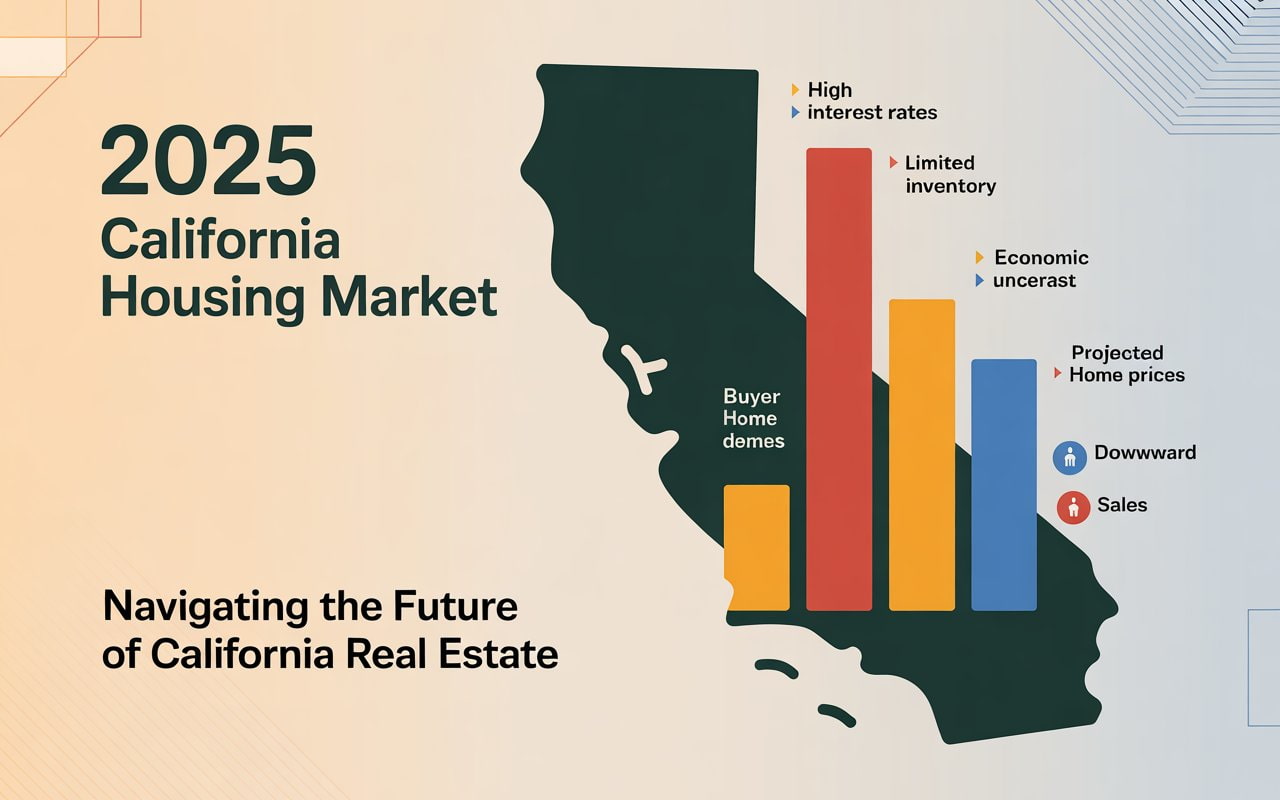
California’s real estate market in 2025 is a dynamic interplay of opportunity and constraint. According to the California Association of Realtors (CAR), the median home price in May 2025 stood at $900,170, with a projected 4.6% increase to $909,400 by year-end. However, single-family home sales declined by 5.1%, with 254,190 units sold in May 2025, signaling cautious buyer behavior amid economic shifts.
Several factors shape this landscape:
- High Interest Rates: Mortgage rates, ranging from 6.5% to 7%, have dampened demand, particularly for first-time buyers grappling with affordability. Higher borrowing costs mean buyers are more selective, prioritizing value and move-in-ready homes.
- Limited Inventory: A persistent shortage of homes for sale fuels competition, sustaining elevated prices in high-demand areas like San Diego, Los Angeles, and the Bay Area. This scarcity benefits sellers but requires precise pricing to attract offers.
- Economic Uncertainties: Inflation, fluctuating job markets, and global economic concerns create hesitation among some buyers, impacting sales volume. However, California’s desirability as a lifestyle and investment destination maintains strong underlying demand.
Sellers who adapt to these conditions—by pricing competitively, highlighting unique features, and targeting motivated buyers—can thrive. For example, emphasizing energy-efficient upgrades or proximity to amenities can appeal to buyers navigating high interest rates. Understanding these trends allows you to craft a strategy that aligns with market realities.
Regional Differences Across California
California’s real estate market is far from uniform, with regional variations significantly influencing pricing, buyer interest, and time on the market. Tailoring your approach to your local market is essential for success.
- Coastal Markets: Cities like San Francisco ($1.2M median price) and Los Angeles ($995,000) are magnets for affluent buyers, driven by proximity to cultural hubs, tech industries, and coastal lifestyles. These markets are fiercely competitive, but well-priced homes often sell within weeks, especially in desirable neighborhoods like Noe Valley or Brentwood.
- Inland Markets: Areas like Fresno ($350,000) and Riverside ($550,000) offer affordability, attracting families, retirees, and investors. Demand is steady but less frenetic, with homes sometimes lingering longer if priced above market value.
- Urban vs. Rural: Urban centers like San Diego benefit from consistent buyer activity, fueled by jobs, schools, and amenities. Rural areas require different strategies, such as Bakersfield or the Central Valley, see lower demand, requiring sellers to emphasize value or unique features like large lots or agricultural potential.
Local factors play a critical role. In San Diego, proximity to beaches, top-rated schools, or tech corridors like Sorrento Valley drives buyer interest. In contrast, inland markets rely on affordability and spacious properties to compete. Neighborhood-level data—such as recent sales, school ratings, or planned developments—helps you position your home effectively. For instance, a San Diego home near Balboa Park may command a premium due to its cultural appeal, while a Fresno property benefits from highlighting low HOA fees or modern upgrades.
Organized records reduce stress for families and professionals managing complex transactions. Knowing you have the right home documents readily available offers peace of mind, especially in a region with frequent property tax reassessments and active HOA communities.
Best Times to Sell Your Home
Timing your sale can significantly impact both price and speed. Data from real estate platforms indicates that spring (March–May) and early summer (June–July) are peak seasons, with increased buyer activity driven by favorable weather and family relocation schedules.
- Why Peak Seasons Matter: Families aim to move before the school year, and milder weather encourages home tours. Listings during these months often attract multiple offers, especially in hot markets. For example, a San Diego home listed in April may see 10–15 showings in the first week, compared to 3–5 in December.
- Regional Variations: Coastal markets like San Francisco (38 days on market) sell faster year-round due to high demand, while inland areas like Fresno (53 days) rely heavily on seasonal peaks. In San Diego, spring listings often coincide with an influx of out-of-state buyers relocating for work.
- Strategic Timing: Listing during high-demand periods maximizes exposure and competition. Avoid major holidays (e.g., Thanksgiving, Christmas) or winter months, when buyer activity typically dips. If you must sell off-season, enhance marketing with virtual tours or highlight seasonal features, like a cozy fireplace.
Monitoring local sales patterns can pinpoint the ideal listing window. In San Diego, listing in early spring often capitalizes on heightened buyer turnout, while Fresno sellers may benefit from early summer to align with family moves.
Preparing Your Home for Sale: Maximizing Appeal and Value

Home Staging and Decluttering
First impressions are critical in a competitive market. Staging and decluttering transform your home into a welcoming, buyer-friendly space, helping prospects envision themselves living there. According to Redfin, staged homes sell faster and for 5–10% more than unstaged ones, making this step a worthwhile investment. To stage effectively:
- Declutter Ruthlessly: Remove personal items like family photos, trophies, or cluttered countertops. Aim for a clean, neutral aesthetic that appeals to a broad audience. For example, clear kitchen counters except for a sleek coffee maker or a bowl of fresh fruit.
- Organize Spaces: Tidy closets, cabinets, and storage areas to showcase capacity. Buyers in California, where space is often at a premium, prioritize ample storage. A well-organized garage or walk-in closet can be a selling point.
- Highlight Key Features: Arrange furniture to emphasize your home’s strengths, such as a spacious living room, modern kitchen island, or panoramic view. In San Diego, highlighting outdoor spaces like patios or balconies appeals to buyers seeking indoor-outdoor living.
Professional staging costs $1,000–$3,000, depending on the home’s size, but DIY staging is effective with minimal expense. Use neutral decor, add fresh flowers, and ensure every room feels bright and airy. The goal is a universal appeal that allows buyers to project their lifestyle onto the space.
Necessary Repairs and Improvements
Buyers in California, particularly in high-priced coastal markets, expect homes to be move-in ready. Addressing repairs and making strategic upgrades can boost your home’s value, reduce buyer objections, and prevent deal-breaking inspection issues.
- Essential Repairs:
- Fix structural issues, such as cracked foundations, leaky roofs, or termite damage, to pass inspections.
- Address safety concerns, like faulty electrical wiring, outdated smoke detectors, or loose handrails.
- Repair minor issues, such as leaky faucets or chipped tiles, to signal meticulous maintenance.
- High-Return Upgrades:
- Apply fresh, neutral paint ($1,000–$3,000) for a 100–150% return on investment. Colors like soft gray or warm beige appeal to modern tastes.
- Update fixtures, such as faucets, cabinet handles, or light fixtures ($200–$500), for a contemporary look. In San Diego, sleek, minimalist hardware resonates with urban buyers.
- Install energy-efficient features, like LED lighting, smart thermostats, or low-flow showerheads, to attract eco-conscious buyers and highlight long-term savings.
- Balancing Investment: Avoid over-improving beyond your neighborhood’s standards. A $50,000 kitchen remodel may not recoup its cost if comparable homes sell for $400,000. Focus on upgrades that align with local expectations, such as quartz countertops in a $800,000 San Diego home.
A pre-listing inspection ($300–$500) identifies issues early, allowing you to address them before buyers’ inspections. For example, fixing a minor plumbing leak upfront prevents buyers from negotiating a $5,000 credit later. Proactive repairs build trust and streamline the sale process.
Curb Appeal: Making a Great First Impression
Your home’s exterior sets the tone for every showing, signaling to buyers that the property is well-maintained. In California’s competitive market, strong curb appeal can draw more showings and spark immediate interest.
- Landscaping: Trim overgrown shrubs, plant seasonal flowers, or add mulch to refresh the yard ($500–$2,000). A neat lawn or xeriscaped garden enhances appeal without excessive maintenance.
- Exterior Maintenance: Pressure wash siding, repaint the front door in a bold color like navy or red, and clean windows for a polished look. These small updates (under $500) create a welcoming vibe.
- California-Specific Features:
- Incorporate drought-resistant plants, such as succulents, lavender, or native grasses, to appeal to water-conscious buyers, especially in San Diego’s semi-arid climate.
- In wildfire-prone areas, use fire-safe landscaping, like gravel pathways, trimmed trees, or non-combustible mulch, to address safety concerns and comply with local regulations.
Small details matter. A new mailbox, updated house numbers, or a vibrant welcome mat can elevate first impressions. In San Diego, where buyers often browse multiple listings, a standout exterior can prompt immediate showings, setting your home apart from the competition.
Selling a Home As Is
If repairs or upgrades aren’t feasible due to time, budget, or property condition, selling “as is” is an option. This means listing without making improvements, though you must disclose all known defects via the Transfer Disclosure Statement (TDS), as required by California law.
- Advantages:
- Saves time by skipping repair schedules and contractor coordination, ideal for sellers with tight timelines.
- Reduces upfront costs, preserving your budget for relocation or other priorities.
- Attracts cash buyers or investors seeking fixer-uppers, particularly in markets like Fresno, where renovation projects are common.
- Drawbacks:
- Lower sale price, typically 5–15% less than move-in-ready homes, as buyers factor in repair costs.
- Smaller buyer pool, as many prefer turnkey properties, especially in high-end markets like San Diego.
- Strict disclosure requirements, which can deter buyers if defects are significant (e.g., foundation issues or outdated electrical systems).
- Considerations: As-is sales still require transparency. For example, disclosing a cracked foundation may lead to lower offers but protects you from legal liability. Buyers may request inspections, so be prepared for negotiations.
Selling as-is suits homeowners with distressed properties, inherited homes, or urgent relocation needs. In San Diego, as-is sales often attract investors flipping properties in up-and-coming neighborhoods like North Park. Weigh the trade-offs carefully to ensure this approach aligns with your financial and timeline goals.
Pricing Your Home to Sell: Strategies for Success
The Art of Accurate Pricing
Pricing your home correctly is one of the most critical decisions in the selling process. Overpricing can deter buyers, leaving your home stagnant on the market, while underpricing risks leaving thousands of dollars on the table. The goal is a competitive price that reflects your home’s market value and local demand. A comparative market analysis (CMA) is the foundation of accurate pricing. A CMA evaluates recent sales of similar homes (comparables) in your area, considering factors like size, age, condition, and location. For example, if 3-bedroom, 2-bath homes in your San Diego neighborhood sold for $750,000–$800,000, pricing at $775,000 might attract multiple offers. Key steps include:
- Analyze Comparables: Identify 3–5 homes sold within the last 3–6 months, within a half-mile radius, with similar features.
- Adjust for Unique Attributes: Add value for upgrades (e.g., a renovated kitchen might add $20,000) or subtract for drawbacks (e.g., an older roof might deduct $10,000).
- Factor in Market Trends: If prices are rising, you may price at the higher end of the range; if softening, aim for the lower end to attract buyers.
Accurate pricing draws serious buyers and minimizes time on the market. In San Diego’s competitive market, a well-priced home can generate offers within days, while an overpriced listing may linger, signaling issues to potential buyers.
Pricing in Different Market Conditions
Market conditions dictate your pricing strategy, requiring flexibility to align with buyer behavior:
- Hot Markets: In high-demand areas like San Diego or San Francisco, price slightly below market value to spark bidding wars. For instance, listing a $800,000 home at $790,000 can attract multiple offers, often pushing the final price above asking. This strategy works well in neighborhoods like Mission Hills, where competition is fierce.
- Slow Markets: In less active areas like rural Central Valley or softening inland markets, price competitively to stand out. If homes are lingering for 60+ days, consider a 2–5% price reduction after 30 days to regain interest.
- Buyer Psychology: Use “charm pricing” (e.g., $799,000 instead of $800,000) to make the price feel more approachable. Small psychological tweaks can influence perceptions, especially for first-time buyers.
Regularly monitor local sales data, such as days on market or offer-to-list price ratios, to assess whether your price remains competitive. In San Diego, where inventory is tight, a strategic price can trigger a frenzy of showings, while in Fresno, a conservative price may be necessary to attract budget-conscious buyers. Mid-Content CTA: Ready to discover your home’s market value? Contact a trusted professional like Adam Kelley in San Diego for a personalized consultation.
Pricing in Different Market Conditions (Continued)
Adapting to market nuances is key. For example, in a balanced market—neither strongly favoring buyers nor sellers—pricing at market value, based on a CMA, ensures steady interest without leaving money on the table. In San Diego’s coastal areas, where demand often outstrips supply, you might test the upper end of the CMA range, especially for unique properties like ocean-view homes. Conversely, in slower markets, offering incentives like covering closing costs can make your price more attractive without lowering the list price. Engaging with a local expert can refine your approach. An agent familiar with San Diego’s micro-markets can identify whether your neighborhood favors aggressive or cautious pricing, ensuring your home stands out without languishing.
Marketing Your Home Effectively: From Listings to Open Houses
Traditional Marketing Methods
Traditional marketing methods remain effective for reaching local buyers and creating buzz in your community, especially in tight-knit markets like San Diego:
- Yard Signs: A professional, weather-resistant sign with clear contact information ($50–$100) grabs attention from passersby. Include a QR code linking to your online listing for tech-savvy buyers.
- Flyers and Postcards: Distribute high-quality flyers in local businesses, community centers, or mailboxes. Highlight key features like “3 Beds, 2 Baths, Walk to Balboa Park” to spark interest.
- Open Houses: Host open houses on weekends, offering refreshments and detailed info packets. Stage the home meticulously, focusing on high-traffic areas like the kitchen and living room. In San Diego, Saturday open houses from 1–4 PM often draw large crowds.
Engaging your neighborhood amplifies word-of-mouth marketing. Neighbors may know friends or family relocating to the area, expanding your buyer pool. Combining traditional methods with digital strategies ensures broad reach, particularly in urban markets where community ties and online searches coexist.
Digital Marketing: Reaching More Buyers
In 2025, digital marketing is indispensable, as over 90% of buyers start their search online, according to the National Association of Realtors (NAR). A robust digital presence ensures your home reaches local, out-of-state, and international buyers.
- Online Listings: Post on Zillow, Redfin, and the Multiple Listing Service (MLS) for maximum exposure. MLS listings syndicate to hundreds of sites, including Realtor.com and Trulia, boosting visibility. Ensure your listing includes detailed descriptions, like “newly renovated kitchen with quartz countertops” or “steps from Mission Bay.”
- Social Media: Share your listing on Instagram, Facebook, and Nextdoor. Use high-quality photos and short videos to showcase your home’s best features. Targeted ads ($100–$500/month) can reach specific demographics, such as young professionals or families relocating to San Diego.
- Virtual Tours: Offer 3D tours or video walkthroughs to accommodate buyers who can’t visit in person. Platforms like Matterport create immersive experiences for $100–$500, ideal for out-of-state buyers or those with busy schedules.
Digital marketing is particularly effective in tech-savvy markets like San Diego, where buyers expect modern, accessible listings. Regularly update your listing with fresh content—such as a seasonal photo of your backyard or a new video tour—to maintain interest and signal an active seller.
Professional Photography and Videography
High-quality visuals are a game-changer in online listings, where first impressions are formed in seconds. NAR reports that 87% of buyers consider photos the most important part of a listing, making professional photography a non-negotiable investment.
- Photography: Hire a professional for bright, wide-angle shots ($200–$500). Focus on key areas like the kitchen, living room, master bedroom, and outdoor spaces. In San Diego, capturing natural light and coastal views can elevate your listing’s appeal.
- Videography: A 1–2-minute video tour ($500–$1,500) showcases your home’s flow and unique features, like a backyard oasis or open-concept layout. Narration or captions can highlight upgrades, such as “energy-efficient windows installed 2024.”
- Premium Features: For high-end homes, consider drone footage ($300–$700) to highlight expansive lots, scenic surroundings, or proximity to landmarks like La Jolla Cove. 3D tours provide an interactive experience, allowing buyers to explore every room virtually.
Poor-quality photos—grainy, dimly lit, or cluttered—can deter buyers before they schedule a showing. In competitive markets like San Diego, where listings are abundant, professional visuals ensure your home stands out, prompting more inquiries and showings.
Navigating the Legal Landscape: What Every California Home Seller Must Know
Required Disclosures and Documents
California law prioritizes transparency to protect both buyers and sellers, requiring several disclosures to ensure a fair transaction. Non-compliance can lead to lawsuits or canceled sales, so thorough preparation is essential.
- Transfer Disclosure Statement (TDS): Mandated by California Civil Code § 1102, the TDS requires you to disclose material defects, such as leaky roofs, plumbing issues, past repairs, or known structural problems. For example, if your home had a termite treatment in 2023, disclose the details to avoid future disputes.
- Natural Hazard Disclosure (NHD): Per Cal. Civ. Code § 1103, you must report if your property is in an earthquake, wildfire, or flood zone. Most California homes fall into at least one hazard zone, making this a standard but critical step. Third-party services can generate NHD reports for $50–$150.
- Additional Disclosures:
- Lead-based paint hazards for homes built before 1978, as required by federal law.
- Homeowners Association (HOA) rules, fees, and financial health, including reserve funds and pending assessments.
- Mello-Roos taxes, special assessments for community facilities like schools or parks, which can impact affordability.
- Any neighborhood nuisances, such as noise from nearby highways or airports.
Review disclosures with a professional to ensure accuracy. In San Diego, where earthquake and wildfire risks are common, providing a comprehensive NHD report upfront builds buyer trust and reduces negotiation friction.
Understanding Contracts and Offers
Once offers arrive, you’ll review purchase agreements, which outline the buyer’s proposed price, terms, and contingencies. Understanding these components is crucial for effective negotiation.
- Contingencies: Common contingencies include:
- Inspection: Allows buyers to back out or renegotiate if major issues are found during inspections.
- Financing: Ensures the buyer secures a mortgage, protecting them if funding falls through.
- Sale of Buyer’s Home: Ties the sale to the buyer selling their current property, which can delay closing.
- Negotiation Factors:
- Price: The highest offer isn’t always best if contingencies are risky or financing is weak.
- Buyer Qualifications: Pre-approved buyers with strong credit and substantial down payments are more reliable.
- Terms: Shorter escrow periods (30 days vs. 60 days) or fewer contingencies reduce uncertainty.
- Multiple Offers: In hot markets like San Diego, multiple offers are common. For example, a well-priced Point Loma home might receive 5–10 offers within a week. Prioritize offers with strong financing, minimal contingencies, and flexibility on closing dates.
Work with a professional to evaluate offers objectively. Counteroffers can refine terms, such as requesting a higher earnest money deposit or a faster closing timeline, to align with your goals.
Working with Real Estate Attorneys
While many sales proceed smoothly with an agent’s guidance, a real estate attorney can safeguard your interests in complex situations:
- When to Hire:
- Disputes arise, such as buyer claims of undisclosed defects or boundary issues.
- Non-standard contracts, like lease-to-own agreements, seller financing, or short sales.
- Probate sales or inherited properties with legal complications, such as multiple heirs.
- Role: Attorneys review California Association of Realtors (CAR) forms, negotiate terms, and ensure compliance with state laws. They can also mediate disputes, reducing the risk of litigation.
- Cost: $500–$2,000, depending on the transaction’s complexity. For high-value homes, this investment is minimal compared to potential legal costs.
In San Diego, where transactions often involve seven-figure sums, an attorney’s expertise can prevent costly mistakes, especially for unique properties like historic homes or waterfront estates. Even in straightforward sales, consulting an attorney for contract review adds peace of mind.
Special Considerations for Different Property Types
Each property type has unique requirements, requiring tailored marketing and disclosures:
- Condos and Townhouses: Disclose HOA fees ($200–$800/month), rules (e.g., pet restrictions), and the association’s financial health. Buyers will scrutinize reserve funds and pending assessments, which can impact affordability. In San Diego, condos in areas like Downtown or Little Italy attract young professionals, so highlight amenities like rooftop decks or gym access.
- Inherited Properties: Address probate requirements, which may involve court approval, and leverage the step-up in basis to minimize taxable gains. For example, a home inherited at $800,000 and sold for $820,000 incurs tax only on the $20,000 difference.
- Vacant Land: Emphasize zoning, access to utilities, and development potential. Buyers may inquire about permits, environmental restrictions, or soil tests, so provide clear documentation. In rural areas, vacant land appeals to developers or retirees seeking custom builds.
Understanding your property’s unique attributes allows you to market it effectively and address buyer concerns upfront. In San Diego, a condo with low HOA fees and modern amenities may stand out, while vacant land in a developing area like Otay Mesa requires highlighting future growth potential.
The Home Selling Process: From Listing to Closing
Step-by-Step Guide to Selling Your Home
Selling a home follows a structured process, with each step building toward a successful transaction:
- Set Goals and Timeline: Define your target sale price, move-out date, and priorities (e.g., speed vs. maximum profit). For example, if relocating for a job, you might prioritize a 30-day closing.
- Prepare the Home: Stage, repair, and enhance curb appeal to attract buyers. A San Diego home with a polished exterior and modern interior can generate immediate interest.
- List the Property: Work with an agent or use flat-fee MLS services to go live on major platforms like Zillow and Redfin.
- Host Showings: Schedule open houses and private tours, ensuring the home is clean and accessible. Weekend showings in San Diego often draw 20–30 visitors in hot markets.
- Review Offers: Evaluate price, contingencies, and buyer qualifications. Counteroffer to improve terms, such as a higher deposit or shorter escrow.
- Enter Escrow: Sign the purchase agreement, deposit funds and deeds with an escrow agent, and meet conditions like inspections or appraisals.
- Close the Sale: Sign final documents, transfer keys, and receive proceeds, typically 30–45 days after offer acceptance.
Expect 30–60 days from listing to offer acceptance in most California markets, with coastal areas like San Diego often moving faster. A clear plan keeps you organized and reduces stress.
The Role of a Real Estate Agent in Selling Your Home
A skilled real estate agent is a game-changer, streamlining the process and maximizing your sale price with professional representation. The National Association of Realtors reports that agent-assisted sales achieve 5–10% higher prices than FSBO sales, with agents offering:
- Market Expertise: Deep knowledge of local trends, buyer preferences, and competitive pricing. In San Diego, an agent familiar with neighborhoods like La Jolla or North Park can pinpoint what drives buyer interest.
- Negotiation Skills: Advocating for the best price and terms, especially in multiple-offer scenarios. Skilled agents can secure $10,000–$50,000 above asking by leveraging buyer competition.
- Paperwork Management: Handling disclosures, contracts, and deadlines to ensure compliance and accuracy. This is critical in California, where legal requirements are stringent.
When choosing an agent, prioritize:
- Local Experience: An agent with a strong track record in your market understands buyer priorities, such as proximity to schools or transit in San Diego.
- Proven Success: Look for a history of quick sales at or above asking price, verified by client reviews or sales data.
- Clear Communication: Choose someone responsive and transparent, providing regular updates on showings, offers, and market shifts.
In competitive markets like San Diego, agents like Adam Kelley offer tailored strategies, from precise pricing to targeted marketing, to maximize value and minimize time on the market. Their expertise is invaluable when navigating high-stakes transactions. Ready to sell your property with expert guidance?
Selling Your Home Without an Agent: FSBO Options and Considerations
For Sale By Owner (FSBO) appeals to sellers aiming to save on commissions, which typically range from 5–6% of the sale price ($30,000 on a $600,000 home). However, it requires significant time, effort, and expertise.
- Advantages:
- Cost savings, allowing you to retain more proceeds or price competitively.
- Full control over pricing, marketing, and negotiations, appealing to hands-on sellers.
- Challenges:
- Time-intensive, requiring you to manage showings, marketing, and paperwork. FSBO sellers often underestimate the hours involved, especially during open houses.
- Complex legal requirements, including TDS, NHD, and contract compliance. Errors can lead to lawsuits or delayed closings.
- Weaker negotiations, as buyers may expect discounts without an agent’s involvement. FSBO homes often sell for 5–6% less than agent-assisted sales.
- Key Steps:
- List on the MLS via flat-fee services ($95–$2,495, e.g., Homecoin, Beycome, or CA Flat Fee) to gain broad exposure.
- Market through social media, flyers, yard signs, and open houses. High-quality photos and virtual tours are critical to compete with agent listings.
- Handle offers, disclosures, and escrow independently, ensuring legal accuracy. Consider hiring an attorney for contract review ($500–$1,000).
FSBO is best for motivated sellers with real estate knowledge, ample time, and a straightforward property. In San Diego’s fast-paced market, where professional representation often drives higher prices, weigh the savings against the potential for a lower sale price or prolonged process. Resources like Houzeo or ListWithClever can simplify FSBO listing, but success depends on your ability to market and negotiate effectively.
Inspections, Appraisals, and Contingencies
Buyers and lenders require evaluations to finalize the sale, and each step can impact the transaction’s outcome:
- Inspections ($300–$600): Buyers typically conduct general, pest, and seismic inspections to identify issues like termite damage, structural weaknesses, or earthquake retrofitting needs. Address major problems before listing to avoid renegotiations. For example, a pre-listing pest inspection ($100–$300) can confirm a termite clearance, reassuring buyers.
- Appraisals ($400–$600): Lenders verify the home’s value matches the offer price to ensure the loan is justified. Provide recent comparables and highlight upgrades (e.g., a new HVAC system) to support your price. If the appraisal comes in low, you may need to lower the price or negotiate with the buyer.
- Contingencies: Buyers can back out if conditions aren’t met, such as:
- Inspection Contingency: Allows renegotiation or withdrawal if significant issues are found.
- Financing Contingency: Protects buyers if they can’t secure a mortgage.
- Sale Contingency: Ties the sale to the buyer selling their current home, which can delay closing.
- Strong offers with fewer contingencies reduce risk and speed up the process.
Proactively addressing issues—such as repairing a faulty water heater or providing a seismic retrofit report—keeps the sale on track. In San Diego, where seismic concerns are prevalent, offering a pre-inspection report can differentiate your home and build buyer confidence.
Closing the Deal: Final Steps
Closing finalizes the transaction, transferring ownership to the buyer, typically 30–45 days after offer acceptance:
- Closing Costs: Sellers typically pay 7–10% of the sale price, including:
- Agent commissions (5–6%, split between buyer and seller’s agents).
- Escrow fees ($1,000–$2,000) for managing funds and documents.
- Title insurance ($1,000–$3,000) to protect against ownership disputes.
- Transfer taxes: $1.10 per $1,000 of the sale price at the county level (e.g., $990 on a $900,000 home), plus city-specific rates (e.g., $4.50 per $1,000 in Los Angeles, $5–$25 per $1,000 in San Francisco).
- Prorated property taxes, covering your share up to the closing date.
- Potential buyer concessions, such as covering repair costs or HOA transfer fees.
- Escrow Process: A neutral third party holds funds and the deed until all conditions (e.g., inspections, financing, title clearance) are met, as regulated by the Real Estate Settlement Procedures Act (RESPA). Escrow typically lasts 30–45 days, depending on contingencies.
- Final Walkthrough: Buyers verify the home’s condition 24–48 hours before closing, ensuring no new damage or missing fixtures. Provide keys, garage remotes, appliance manuals, and any required documents, such as warranty information for recent upgrades.
Once documents are signed and funds are released, ownership transfers, and you receive your proceeds. In San Diego, where closings are often expedited due to high demand, thorough preparation ensures a smooth process, allowing you to move forward with confidence.
Tax Implications and Financial Considerations
Capital Gains Tax on Home Sales
Profits from your home sale may be subject to capital gains tax, but federal and state exclusions can significantly reduce or eliminate your liability:
- Federal Exclusions: You can exclude $250,000 (single) or $500,000 (married) of gains if you lived in the home as your primary residence for at least 2 of the last 5 years, per IRS Publication 523. Most sellers qualify, as this applies to primary residences, not investment properties.
- California Tax: Gains above the federal exclusion are taxed at 1–13.3%, depending on your income. Unlike federal tax, California doesn’t distinguish between short- and long-term gains, so all gains are taxed at your ordinary income rate.
- Inherited Properties: The step-up in basis adjusts the home’s value to its market value at the time of inheritance, often minimizing taxable gains. For example, if you inherit a home valued at $800,000 and sell it for $820,000, only the $20,000 difference is taxable.
Consider a $900,000 home sale with a $400,000 basis (original purchase price plus improvements, like a $50,000 kitchen remodel). The $500,000 gain is fully excluded for a married couple, resulting in no federal tax. However, high-income sellers may owe California tax on gains above the exclusion. For instance, a single seller with a $600,000 gain would owe state tax on $350,000 ($600,000 minus $250,000 exclusion), potentially $35,000–$46,550 depending on their tax bracket. Consult a tax professional to optimize your strategy. In San Diego, where home values often yield large gains, planning for tax implications can preserve more of your proceeds.
Transfer Taxes and Other Fees
Sellers face several fees at closing, which vary by location and sale price:
- County Transfer Tax: $1.10 per $1,000 of the sale price (e.g., $990 on a $900,000 home), paid to the county recorder’s office.
- City Transfer Taxes: Rates differ widely:
- San Francisco: $5–$25 per $1,000, depending on the sale price (e.g., $6,750–$22,500 on a $900,000 home).
- Los Angeles: $4.50 per $1,000 ($4,050 on a $900,000 home).
- San Diego: No additional city transfer tax, making it more seller-friendly.
- Prorated Property Taxes: You’re responsible for property taxes up to the closing date, prorated based on the sale timeline. For example, if you close on June 30, you pay half the annual tax bill.
- Additional Costs: Escrow fees ($1,000–$2,000), title insurance ($1,000–$3,000), and potential buyer concessions (e.g., covering $5,000 in repairs) typically total 1–2% of the sale price, excluding commissions.
In high-tax cities like San Francisco, closing costs can exceed 10% of the sale price, while San Diego’s lower tax structure keeps costs closer to 7–8%. Review a preliminary closing statement with your agent or escrow officer to budget accurately and avoid surprises.
Financial Planning for Your Sale Proceeds
Your sale proceeds offer significant financial flexibility, and thoughtful planning ensures you maximize their impact:
- Reinvest in Real Estate: Use a 1031 exchange to defer capital gains tax by purchasing another investment property within 180 days. This strategy is popular among landlords and investors, allowing you to roll proceeds into a rental property or commercial asset. For example, selling a $900,000 home and reinvesting in a $1M duplex defers taxes while building wealth. If you’re looking to buy your next property, we can help you find the perfect investment.
- Pay Off Debt: Clear mortgages, credit cards, or student loans to reduce financial burdens and improve cash flow. Paying off a $200,000 mortgage can save thousands in interest, freeing up funds for other goals.
- Save or Invest: Work with a financial advisor to allocate funds into retirement accounts, stocks, bonds, or real estate investment trusts (REITs) for long-term growth. In San Diego, where living costs are high, investing proceeds can secure your financial future.
California’s buyer assistance programs, such as the California Housing Finance Agency (CalHFA), increase demand by helping first-time buyers afford homes, indirectly benefiting sellers. CalHFA’s low-interest loans and down payment assistance make your home accessible to a broader pool, potentially driving up offers. For example, a San Diego starter home priced at $600,000 may attract CalHFA-eligible buyers, increasing competition. Plan your proceeds in advance, considering tax implications, debt obligations, and long-term goals. In San Diego, where home sales often yield six-figure proceeds, consulting a financial advisor can align your sale with broader wealth-building strategies.
Why Choose Our Home Selling Services
Selling your home in California’s competitive market demands expertise, and Adam Kelley in San Diego delivers unmatched results. With over 15 years of experience and hundreds of successful transactions, our team has a proven track record of securing sale prices 8% above market averages. We specialize in San Diego’s diverse neighborhoods, from coastal La Jolla to vibrant Downtown, crafting tailored pricing and marketing strategies that attract qualified buyers. Our cutting-edge approach includes 3D virtual tours, drone footage, and targeted social media campaigns, ensuring maximum exposure, with 90% of our listings selling within 30 days. Clients rave about our transparent communication and personalized service, reflected in our 5-star ratings across platforms. Backed by local insight and a commitment to your success, Adam Kelley is your trusted partner for a seamless, high-value sale. Contact us today to start your journey.
Frequently Asked Questions (FAQs) About Selling a Home in California
How long does it take to sell a home in California? Typically 30–60 days, depending on market conditions, pricing, and location. Hot markets like San Diego may see sales in 2–3 weeks, while rural areas take longer. What are the costs involved in selling a home? Expect agent commissions (5–6%), closing costs (1–2%), repairs, and transfer taxes ($1.10 per $1,000). Total costs range from 7–10% of the sale price. Do I need to hire a real estate agent to sell my home? No, FSBO is an option, but agents streamline marketing, negotiations, and paperwork, often increasing the sale price by 5–10%. What happens if my home doesn’t sell quickly? Reassess pricing, enhance marketing (e.g., new photos, virtual tours), or make repairs. A professional can help adjust your strategy. Are there any specific laws or regulations I need to be aware of? Comply with TDS (material defects), NHD (natural hazards), and CAR forms. Non-compliance risks lawsuits or delayed closings. How do I sell different types of properties (e.g., condos, townhouses, land)? Condos require HOA disclosures; land needs zoning details; inherited homes involve tax nuances like step-up in basis. What are the tax implications of selling an inherited home? Step-up in basis minimizes gains. Federal exclusions ($250,000/$500,000) may apply. Consult a tax professional for clarity. Can I sell my home as is in California? Yes, but disclose defects via TDS. As-is sales may fetch 5–15% less but attract investors or cash buyers. How do I handle multiple offers on my home? Compare price, contingencies, and buyer financing. Accept the strongest offer or counter multiple buyers for better terms. What is the role of escrow in the home selling process? Escrow holds funds and documents until all conditions (e.g., inspections, financing) are met, ensuring a secure transaction. How do I prepare for buyer inspections? Address pest, structural, or seismic issues upfront. A pre-listing inspection ($300–$500) identifies problems early. What are Mello-Roos taxes, and do I need to disclose them? Special assessments for community facilities; disclosure is mandatory, as they impact buyer affordability. How do I attract out-of-state buyers? Use digital marketing, professional photos, and virtual tours. List on platforms like Zillow for broad reach. What is a 1031 exchange, and how does it work? Defers capital gains tax by reinvesting proceeds into another property within 180 days. Consult a 1031 specialist. How do I ensure my home appraises for the offer price? Provide recent comparables and highlight upgrades. If low, negotiate with the buyer or adjust the price. What are the benefits of selling in a hot market? Higher prices, faster sales, and multiple offers. Strategic pricing can spark bidding wars. How do I market vacant land? Highlight zoning, utilities, and development potential. Drone footage showcases size and surroundings.
Conclusion
Selling your home in California in 2025 is a complex but rewarding endeavor. By mastering market trends, preparing your property meticulously, pricing strategically, marketing effectively, and navigating legal and financial requirements, you can achieve a high-value sale with minimal stress. Whether you’re in San Diego’s bustling coastal market or Fresno’s affordable inland hub, knowledge and preparation are your greatest assets. If you are searching for a “real estate broker near me,” take the next step with confidence. Partner with Adam Kelley in San Diego for expert guidance tailored to your goals. Call (760) 888-6491 or visit adamkelleyrealestate.com to schedule your personalized consultation today. Your successful home sale starts now.