How to Choose a Realtor in 2026: The Complete San Diego Buyer & Seller Guide
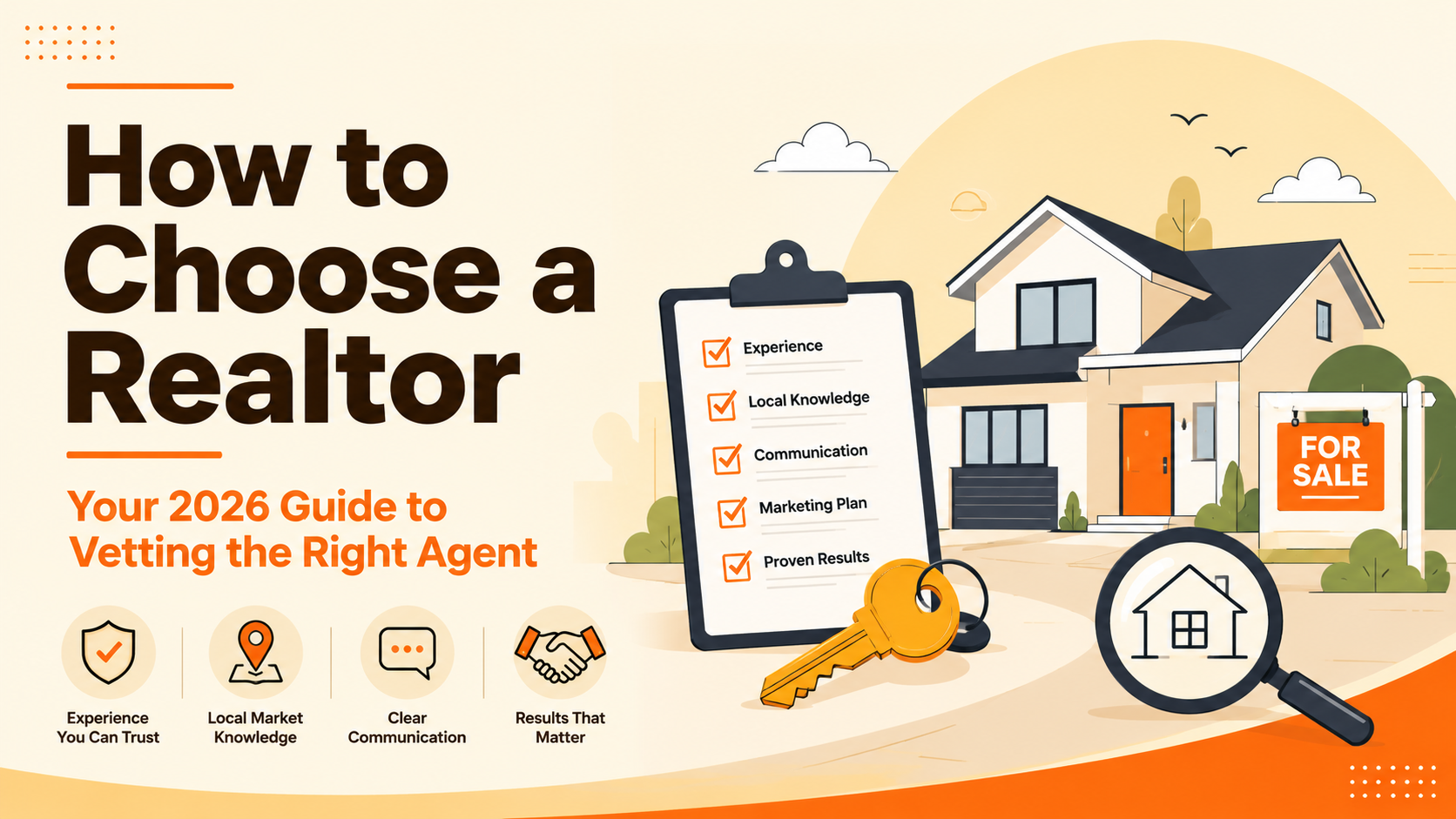
How to Choose a Realtor in 2026: The Complete San Diego Buyer & Seller Guide
Picking the wrong real estate agent doesn’t just cost you money; it costs you time, leverage, and sometimes the home you actually wanted. In a market like San Diego, where inventory is tight and competition for well-priced listings is fierce, the agent you hire is arguably the single biggest variable in whether your transaction goes smoothly or turns into a headache.
This guide walks through exactly how to choose a realtor in 2026, what’s changed, what still matters, and the specific questions and red flags that separate a great agent from an average one. Whether you’re buying your first home in San Diego, selling a property in Carlsbad, or relocating to Escondido, the process of vetting an agent is the same, and it’s worth doing right.
Why Choosing the Right Realtor Matters More in 2026
The real estate industry has shifted meaningfully over the past couple of years. Commission structures are more negotiable and transparent than they used to be, AI-powered home search tools have changed how buyers shortlist properties, and local inventory shortages mean pricing and offer strategy are less forgiving of mistakes. An agent who was “good enough” five years ago may not have kept up with any of that.
At the same time, the fundamentals haven’t gone anywhere. Most buyers and sellers still work with a licensed agent because a good one still saves money, reduces risk, and removes a lot of the guesswork from one of the largest financial decisions most people ever make. The difference in 2026 is that you now have more tools than ever to actually verify an agent’s track record before you sign anything, so there’s no excuse for skipping the vetting process.
What’s Different About Choosing a Realtor in 2026
A few shifts are worth understanding before you start interviewing agents, because they change what “good” actually looks like this year:
- Buyer representation agreements are now standard. Following industry-wide changes to how buyer’s agents are compensated, most buyers are asked to sign a written agreement before touring homes. Read it carefully, know the term length, the commission rate, and whether it’s exclusive to one agent.
- AI-assisted search has changed how buyers shortlist homes, but it hasn’t replaced the negotiation, inspection guidance, and local judgment a human agent provides. Be wary of any agent whose entire pitch is “the app does the work”; that’s not representation, that’s a search filter.
- Inventory in San Diego and North County remains tight relative to demand, which means pricing strategy and offer timing matter more than ever. An agent who isn’t watching daily shifts in your specific submarket is working from stale information.
None of this changes the fundamentals of vetting an agent, it just raises the bar for what “local expertise” and “communication” actually need to look like in practice.
Step 1: Verify Licensing, Credentials, and Track Record
Before anything else, confirm the agent is actively licensed in your state and check how long they’ve held that license. California’s Department of Real Estate (DRE) maintains a public license lookup where you can confirm status, brokerage affiliation, and whether there have been any disciplinary actions.
Beyond the license itself, look at the numbers behind their career:
- How many transactions have they closed, and over what time period?
- What’s the total dollar volume of real estate they’ve sold?
- Do they specialize in your price range and property type, or is your deal an outlier for them?
An agent’s About page is usually the fastest place to find this kind of track record, years of experience, total sales volume, and number of properties sold are all things a transparent agent will publish rather than make you ask for.
Step 2: Prioritize Local Market Expertise
National statistics don’t sell your house, your specific neighborhood’s comps do. A realtor who knows the difference between pricing trends in Torrey Highlands and pricing trends in Oceanside is going to price your listing more accurately, negotiate more credibly, and spot opportunities a generalist agent would miss entirely.
Ask any agent you’re considering:
- How many transactions have you closed in this specific neighborhood or zip code in the last 12 months?
- What’s happening to inventory and days-on-market here right now?
- Which nearby areas are trending up, and why?
If they can’t answer specifically for your target neighborhood, whether that’s Carlsbad Village, La Costa, or elsewhere in North County — that’s a sign they’re spread too thin or simply don’t specialize where you’re buying or selling.
Step 3: Understand Buyer’s Agents vs. Listing Agents
Not every realtor operates the same way, and the distinction matters for who they’re legally working for.
A listing agent (seller’s agent) represents the seller, markets the property for sale, and negotiates on the seller’s behalf to get the highest price and best terms.
A buyer’s agent represents you as the buyer, helps you find and evaluate homes to buy, and negotiates on your behalf , including price, contingencies, and repair requests.
Some agents work both sides depending on the transaction (dual agency), which is legal in California but requires disclosure and your written consent. If you’re buying, make sure you understand whether the agent showing you a home is representing you exclusively or also representing the seller, the incentives are different in each scenario.
Step 4: Evaluate Communication Style and Availability
Real estate moves fast, especially in competitive pockets of San Diego where a well-priced listing can get multiple offers within days. An agent who takes 24 hours to respond to a text is going to cost you a showing, an offer deadline, or leverage in negotiations.
Before hiring anyone, ask directly:
- How do you prefer to communicate, text, call, email?
- What’s your typical response time during an active transaction?
- Will I be working directly with you, or handed off to a team member or assistant?
Client reviews are one of the best places to check this. Look specifically for language about responsiveness and accessibility, not just “great experience”; vague five-star reviews tell you less than reviews that describe how the agent actually communicated during the process.
Step 5: Review Their Marketing and Technology Strategy
If you’re selling, marketing strategy is where a strong agent earns their commission. In 2026, “marketing” should mean more than a sign in the yard and an MLS listing. Ask about:
- Professional photography and video (including drone/aerial where relevant)
- How they price using current comps and market data, not just historical averages
- Their online presence, search visibility, social media reach, and past listing performance
- Whether they use AI-assisted tools for pricing accuracy, buyer matching, or market forecasting
A strong home valuation process at the start of the relationship is a good early signal, if an agent gives you a number without walking you through comparable sales and current market conditions, be skeptical of both the number and the agent.
Step 6: Get Clear on Commission and Fee Structure
Commission rates are negotiable and have become more transparent industry-wide. Don’t assume a flat percentage, ask directly what the agent charges, what that fee covers, and whether it changes based on service level (full service vs. limited service). Get this in writing before you sign a buyer or listing agreement, not after.
It’s also worth asking what happens if the relationship isn’t working: for example, whether a listing agreement has an easy exit clause if you’re unhappy with performance after a reasonable trial period.
Step 7: Read Reviews, and Actually Talk to Past Clients
Star ratings are a starting point, not the finish line. Read a handful of full reviews and look for patterns: Do multiple clients mention the same strengths (responsiveness, negotiation, local knowledge)? Do any mention the same complaints?
Where possible, ask the agent directly for a past client you can call, not just the glowing testimonials on their site, but someone who closed a similar type of transaction to yours. A confident, experienced agent won’t hesitate to connect you.
Step 8: Interview at Least Two or Three Agents
Even if a friend refers you to someone great, it’s worth interviewing more than one realtor before committing, especially for a higher-stakes sale. Bring the same list of questions to each conversation so you can compare answers apples-to-apples:
- How many homes have you closed in this specific area in the past year?
- What’s your strategy for pricing my home / helping me win in a competitive offer situation?
- How will you communicate with me, and how often?
- Can you walk me through a recent, similar transaction from start to finish?
- What separates you from other agents in this market?
Pay attention not just to the answers, but to how specific and confident they are. Vague answers to direct questions are a preview of how the actual transaction will go.
What to Expect Once You Hire a Realtor
Knowing the general timeline helps you judge whether your agent is keeping pace or falling behind.
If you’re buying: expect an initial consultation to define your budget, financing status, and target neighborhoods, followed by a signed buyer’s agreement, an active search phase with scheduled showings, an offer and negotiation phase, then inspection, appraisal, and closing. A strong agent proactively flags deadlines instead of waiting for you to ask “what’s next.”
If you’re selling: expect a listing consultation and home valuation, pre-listing prep recommendations (repairs, staging, photography), an active marketing period, offer review and negotiation, then escrow through to close. Ask upfront roughly how long homes similar to yours have been taking to sell in your specific area, not the county-wide average.
In both cases, a good agent gives you a realistic timeline early and updates you when it changes, rather than leaving you to guess. If you’re weighing whether now is even the right time to make a move, it’s also worth reviewing the pros and cons of buying vs. renting or, for certain deals, what buying a foreclosed home actually involves before you commit to a search strategy.
Realtor vs. Discount Brokerage vs. For-Sale-By-Owner
It’s worth briefly addressing the alternatives, since they come up in almost every “how do I sell my house” conversation:
- Discount or flat-fee brokerages typically offer limited service, often just an MLS listing, in exchange for a lower fee. This can work for a highly experienced seller in a hot market, but it shifts marketing, negotiation, and paperwork risk onto you.
- For-sale-by-owner (FSBO) saves the listing-side commission entirely, but sellers typically lose more in final sale price than they save in fees, largely due to underpricing, weaker marketing reach, and negotiating without professional representation.
- A full-service local realtor costs more upfront but generally nets sellers a higher final price and a smoother process, particularly in a market where an appraiser’s valuation and accurate comps can make or break a deal.
The right choice depends on your experience level, timeline, and how much risk you’re comfortable managing yourself. For most buyers and sellers, the value a skilled local agent adds, in pricing accuracy, negotiation, and avoiding costly mistakes , outweighs the commission cost.
Red Flags to Watch For
A few warning signs are worth taking seriously no matter how good an agent’s overall reputation seems:
- Pressure to overprice a listing just to win it, this often leads to a stale listing and price cuts later
- Reluctance to provide references or past client contacts
- Vague or evasive answers about commission structure
- Poor communication even during the interview process, before they’ve technically got your business
- No specific local data to back up their pricing or strategy recommendations
If you notice more than one of these during the interview stage, treat it as a preview of the transaction, not an exception to it.
Why San Diego Buyers and Sellers Choose Adam Kelley
Everything above is the framework, here’s how it plays out in practice. Adam Kelley has over 15 years of experience across San Diego and North County, with more than $200 million in real estate sold and 300+ properties closed, consistently ranking in the top 1% of agents nationwide for volume and client satisfaction.
That track record is backed by deep, hyperlocal knowledge across San Diego, Carlsbad, Escondido, Oceanside, Vista, and Bonsall — not a generic, county-wide pitch. Whether you’re weighing a home viewing checklist before your first showing, comparing the pros and cons of buying vs. renting, or trying to understand what happens after closing, the goal is the same: give clients the specific, local, honest guidance that generic national platforms can’t.
If you’re ready to start the conversation, schedule a consultation or browse current listings to see what’s available right now.
Final Checklist: How to Choose a Realtor
How to choose a realtor
Check off each step before you sign with an agent.
Ready to put this into practice?
Once you’ve checked off each step, you’ll know exactly what to look for.
Frequently Asked Questions
How many realtors should I interview before choosing one?
Most experts recommend interviewing at least two to three agents before deciding, even if you already have a strong referral. This gives you a real basis for comparison on pricing strategy, communication style, and local expertise rather than taking one agent’s pitch at face value.
What’s the difference between a realtor and a real estate agent?
All realtors are licensed real estate agents, but not all agents are realtors. “Realtor” is a trademarked title reserved for agents who are active members of the National Association of Realtors and agree to follow its code of ethics.
Should I choose the agent with the lowest commission?
Not automatically. A lower commission can mean less marketing budget, less negotiation leverage, or less experience, all of which can cost you more than the commission difference in a lower sale price or a missed opportunity. Compare value and track record, not just the fee.
Can one agent represent both the buyer and the seller?
Yes, this is called dual agency and it’s legal in California, but it requires full disclosure and written consent from both parties. Many buyers and sellers prefer separate representation to ensure their interests are advocated for independently.
How do I know if a realtor really knows my neighborhood?
Ask for specific, recent examples, closed sales in that exact area within the last 6-12 months, current inventory levels, and pricing trends. A realtor who truly knows a neighborhood will answer with specifics, not general statements about the broader city or county.

Adil Imran
Recent Posts

Realtor Choosing Mistakes: 10 Costly Errors to Avoid When Hiring a Real Estate Agent

How Much House Can I Afford in San Diego? 2026 Guide