
Quick Answer: Is Selling a House With a Real Estate Agent Worth It?
Short answer: For most homeowners, yes. Selling a house with a real estate agent means a licensed professional prices your home using local sales data, markets it on the MLS, manages showings, negotiates offers, and guides you through closing. Agents typically charge a total commission of about 5% to 6% of the sale price, and that fee is negotiable. A strong agent may help offset the cost through better pricing, fewer costly mistakes, and a smoother closing.
What you will learn in this guide:
- What a listing agent actually does for sellers
- How commission works after recent industry rule changes
- What not to tell your realtor and what not to fix before listing
- Questions to ask when interviewing agents
- How selling with an agent compares with selling on your own
- Direct answers to common seller questions
If you want a local opinion on your home, request a home value consultation with Adam Kelley.
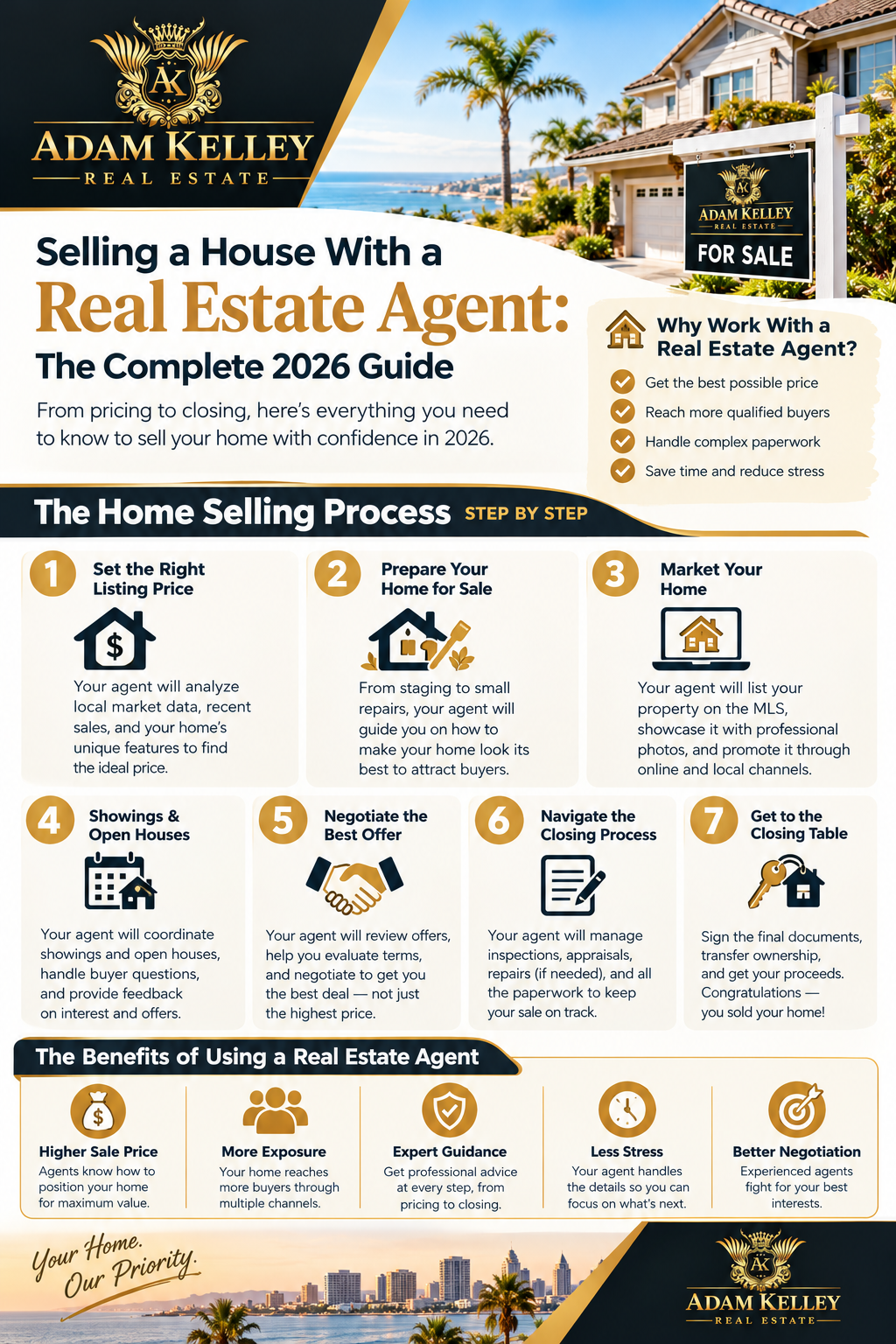
What Does It Mean to Sell a House With a Real Estate Agent?
Selling a home with a real estate agent means hiring a licensed professional, often a REALTOR® who follows the National Association of Realtors Code of Ethics, to represent you under a written listing agreement. The agent becomes your advocate. Their job is to price the property correctly, present it well, expose it to qualified buyers, and protect your interests from the first showing to the closing table.
A home sale involves dozens of moving parts: disclosures, inspections, appraisals, contingencies, escrow timelines, lender requirements, and negotiations that can move tens of thousands of dollars. An experienced agent has handled those moving parts many times. A first-time seller usually has not.
If you are still deciding whether a professional is right for you, our guide on how to choose a realtor explains what separates a strong agent from an average one.
Listing Agent vs. Selling Agent: What Is the Difference?
- Listing agent (seller’s agent): Works for you, the seller. They price, market, and negotiate on your behalf.
- Selling agent (buyer’s agent): Works for the buyer who ends up purchasing your home. They bring the offer to you.
The word “selling” in “selling agent” is misleading, because that person represents the buyer. When you hire an agent to sell your house, you are hiring a listing agent.
What a Real Estate Agent Does for Sellers
The benefits of using a real estate agent to sell your home come down to five core jobs. Each one protects either your price, your time, or your legal position.
1. Pricing Strategy and Comparative Market Analysis
Pricing is the single most important decision in any sale. Your agent prepares a Comparative Market Analysis (CMA), which compares your home with recently sold, pending, and active listings nearby. A CMA looks at square footage, condition, lot, location, and market pace to land on a competitive asking price.
Price too high and the home sits, collects price cuts, and gets labeled stale. Price too low and you leave money behind. A good agent explains the reasoning, shows the data, and adjusts the plan if the market responds differently than expected.
2. Home Preparation and Staging Advice
Agents walk through your home the way a buyer will. They recommend high-return repairs, neutral paint, decluttering, deep cleaning, landscaping touch-ups, and staging where it makes sense. Just as important, they tell you what to skip, which saves you money and stress before the home ever hits the market.
3. Marketing and Exposure
A professional listing goes far beyond a yard sign. Your agent typically:
- Lists the property on the Multiple Listing Service (MLS), which feeds major portals like Zillow, Redfin, and Realtor.com
- Coordinates professional photography, video, and floor plans
- Writes listing copy that highlights what buyers care about
- Runs targeted online and social campaigns
- Shares the home with their network of buyer agents and investors
MLS access is one of the biggest practical advantages. Most active buyers and their agents search there first.
4. Showing Management and Buyer Feedback
Your agent schedules private tours and open houses, screens visitors for safety, and gathers feedback from buyers and agents. That feedback is valuable. If several buyers mention the same concern, you can respond with a price adjustment, a repair, or a different marketing angle.
5. Negotiation, Contracts, and Closing
Offers are rarely just about price. Contingencies, closing dates, repair requests, concessions, and financing terms all carry real money value. Your agent reviews each offer, explains the trade-offs, negotiates counteroffers, and coordinates with the escrow officer, title company, lender, and buyer’s agent through closing. They also help keep your paperwork compliant with state disclosure rules.
How Much Does It Cost to Sell With a Real Estate Agent?
The cost of selling with a realtor is usually the biggest question sellers ask, and it deserves a clear answer.
Traditional Real Estate Commission
Historically, total commission has ranged from about 5% to 6% of the final sale price, split between the listing agent and the buyer’s agent. Commission is paid at closing out of your sale proceeds, so you do not write a check up front. Rates are negotiable.
How Much Commission Do You Pay on a $300,000 House?
| Sale Price | 5% Commission | 6% Commission | Listing-Side Share (Approx.) |
|---|---|---|---|
| $300,000 | $15,000 | $18,000 | $7,500–$9,000 |
| $500,000 | $25,000 | $30,000 | $12,500–$15,000 |
| $900,000 | $45,000 | $54,000 | $22,500–$27,000 |
These are illustrations, not quotes. Your actual rate depends on your agent, brokerage, market, and negotiated agreement.
How the Industry Rule Changes Affect Sellers
Following the 2024 National Association of Realtors settlement and related industry changes, agent compensation is more transparent and more separated than before. Three points matter to sellers:
- Commission is negotiable. Listing agreements should clearly state the compensation agreed upon.
- Buyer-agent compensation is unbundled. Offers of compensation to buyer agents can no longer be advertised on the MLS, and buyers are expected to sign written agreements with their own agents.
- Sellers can still choose to offer a buyer-agent incentive. It may help widen the pool of buyers, but it is a strategic choice, not an automatic requirement.
Ask any agent you interview to explain how they handle buyer-agent compensation and what it means for your net proceeds.
Other Costs to Plan For
Commission is not the only expense. Budget for closing costs, prep and repair costs, staging or cleaning, possible concessions, property taxes, and loan payoff amounts. See our guide to closing costs in San Diego.
Is It Worth It to Use a Realtor to Sell Your House?
For most sellers, yes, but the honest answer depends on your situation. Here is a fair look at both sides.
Reasons It Is Worth Paying an Agent
- Better pricing accuracy. Data-backed pricing reduces the risk of underpricing or sitting on the market.
- Wider exposure. MLS listing and an agent network reach buyers a private sale may never see.
- Stronger negotiation. An agent negotiates for a living and stays emotionally detached from your home.
- Fewer legal and paperwork errors. Mistakes in disclosures or contracts can create liability after closing.
- Time savings. Calls, showings, follow-ups, and paperwork can feel like a part-time job.
When Sellers Reconsider
Some sellers have a ready buyer, such as a family member or neighbor, or feel confident handling a sale themselves. For everyone else, the question is usually not “Can I avoid the commission?” but “Which agent will earn their fee?”
How to Sell Your House With a Realtor: Step by Step
Here is the typical path from first conversation to closing.
- Interview agents and choose one. Speak with two or three local agents. Compare marketing plans, CMAs, communication, and track records. Read our guide on choosing the right real estate agent.
- Sign a listing agreement. Review the term, commission, services, and cancellation provisions carefully.
- Prepare the home. Follow a prioritized prep list covering repairs, cleaning, decluttering, and staging.
- Price, photograph, and launch. Finalize pricing, photography, listing copy, MLS publication, and marketing.
- Show the home and review feedback. Your agent reports activity and recommends adjustments if needed.
- Review offers and negotiate. Compare price, contingencies, closing date, and buyer qualifications.
- Complete inspection, appraisal, and escrow. Work through inspections, lender appraisal, contingencies, and repair negotiations.
- Close and get paid. Sign final documents, transfer funds, and keep important records. See our guide to essential real estate documents.
What Not to Tell Your Realtor When Selling
Your listing agent owes you loyalty and confidentiality, but your words still shape strategy. Some information can weaken your negotiating position if it reaches the wrong ear.
Your Absolute Bottom-Line Price
Give your agent a realistic target and a general sense of flexibility. Think twice before announcing the exact lowest figure you would accept. Keeping your true floor private can protect your negotiating position.
That You Are in a Rush
Your agent needs to know your timeline to build a plan. But urgency can weaken your position if communicated to buyers. Share your timing honestly with your agent and discuss how it will be handled in negotiations.
Your Emotional Triggers Around Offers
State your goals clearly: net proceeds, timing, and certainty. Avoid telling your agent you will accept the first reasonable offer just to get it over with.
What You Should Always Tell Your Realtor
Do not hide material facts about the property. Known defects, past water damage, unpermitted work, neighbor disputes, or foundation problems must be handled properly. In California, sellers have disclosure obligations, and hiding issues can lead to legal trouble after closing. Telling your agent early lets them plan around problems instead of being surprised by an inspector.
What Not to Fix When Selling a House
Sellers often overspend on prep. A smart agent helps you target repairs that pay off and skip those that do not.
Repairs and Upgrades Usually Worth Doing
- Fresh neutral paint in main living areas
- Deep cleaning, decluttering, and light staging
- Minor repairs such as leaky faucets, broken fixtures, and damaged trim
- Curb appeal: trimmed landscaping, clean entry, tidy front door
- Safety items flagged by inspectors, like exposed wiring or missing handrails
What You Often Do Not Need to Fix
- Full kitchen or bathroom remodels. You rarely recoup the entire cost, and buyers may prefer their own design choices.
- Highly personal design projects. Bold tastes narrow your buyer pool.
- Cosmetic flaws buyers can easily fix, such as worn carpet, if priced accordingly.
- Major systems on an as-is plan, where pricing and disclosure may be preferable to costly repairs.
The right answer depends on your market and price point. Ask your agent to show comparable homes and explain which upgrades influenced their selling prices.
Questions to Ask a Realtor When Selling Your House
Ask questions that reveal how an agent works, not just what they promise.
Experience and Track Record
- How many homes have you sold in my neighborhood in the past 12 months?
- What is your average list-to-sale price ratio and average days on market?
- Will I work with you directly, or with a team member or assistant?
Pricing and Marketing
- How did you arrive at your suggested list price, and which comparable sales support it?
- What does your marketing plan include, specifically?
- How will you adjust the plan if we receive little activity in the first two weeks?
Fees and Contract Terms
- What is your commission, and what exactly does it cover?
- How do you handle buyer-agent compensation under current rules?
- What is the length of the listing agreement, and can I cancel if I am unhappy?
Communication
- How often will you update me, and by what method?
- What would you advise me to do differently to net more money?
A confident agent welcomes these questions. For more details, see our guide to choosing a listing agent to sell your house.
Tips for Hiring the Right Listing Agent
Interview More Than One Agent
Talk to at least two or three candidates. Comparing marketing plans and CMAs side by side shows you who has done real homework on your property.
Check Local Experience
Look for a proven record in your neighborhood and price range. A downtown condo specialist and a luxury coastal agent may use very different strategies.
Consider a Shorter Listing Term
A three-month listing agreement gives you a natural checkpoint to evaluate performance, while a six-month term locks you in longer. Ask what is standard locally and whether the agent will agree to a shorter initial term.
Avoid Common Seller Traps
- Choosing the agent who promises the highest price just to win your business
- Choosing only on the lowest commission
- Revealing your bottom-line number or signaling urgency
- Skipping the fine print on termination and fees
Want to see how top agents in your market stack up? Browse our overview of the top real estate agents in San Diego.
Selling With an Agent vs. Selling Without a Realtor (FSBO)
Many owners consider selling on their own. Here is a balanced comparison.
| Factor | With an Agent | Without an Agent (FSBO) |
|---|---|---|
| Pricing | Data-backed CMA and market insight | You research and set the price |
| Marketing | MLS, professional photos, agent network | You arrange listing services and marketing |
| Negotiation | Professional negotiator | You negotiate directly |
| Paperwork | Agent coordinates disclosures and contracts | You or an attorney handle documents |
| Time | Lower time commitment | High: calls, showings, follow-ups |
| Cost | Negotiated agent compensation | No listing-agent fee, but other costs remain |
| Risk | Reduced through professional experience | Greater risk of pricing or legal mistakes |
FSBO can work when you have a ready buyer, strong market knowledge, and time to manage details. A local agent consultation can give you a useful benchmark before deciding.
Selling With an Agent: The 5-Part Process
A successful home sale is a coordinated process. Each stage helps protect your price, reduce uncertainty, and keep the transaction moving.
| 01 | Price Strategically Use comparable sales, property condition, and buyer activity to establish a competitive asking price. |
| 02 | Prepare the Property Prioritize cleaning, decluttering, curb appeal, small repairs, and staging where it supports the home’s positioning. |
| 03 | Market to Buyers Combine MLS exposure, professional photography, listing copy, digital promotion, and agent outreach. |
| 04 | Compare and Negotiate Evaluate price alongside financing, contingencies, concessions, closing date, and buyer qualifications. |
| 05 | Manage Escrow to Closing Coordinate inspections, appraisal, disclosures, title, escrow, deadlines, and final documents. |
Seller takeaway: The best outcome is not always the highest offer. Compare net proceeds, risk, timing, and certainty of closing together.
Common Mistakes Sellers Make When Using an Agent
- Overpricing based on emotion or online estimates. Online estimates are starting points, not appraisals.
- Refusing reasonable feedback. If multiple buyers raise the same issue, listen.
- Skipping pre-listing prep. First impressions drive offers.
- Limiting showing access. Fewer showings mean fewer offers.
- Focusing only on price. Net proceeds depend on terms, contingencies, and closing certainty.
- Hiring based only on friendship. Competence matters more than familiarity.
People Also Ask: Quick Answers to Common Seller Questions
What not to say to a real estate agent when selling?
Avoid stating your exact lowest acceptable price or signaling that you will accept almost anything to finish quickly. Be fully honest about the property’s condition and your timeline, so your agent can plan.
How much commission do you pay on a $300,000 house?
At a total commission of 5% to 6%, the cost is about $15,000 to $18,000. The rate is negotiable and depends on the agent and market.
Is it worth it to use a realtor to sell your house?
For most sellers, yes. An agent’s pricing skill, MLS exposure, negotiation experience, and transaction management can improve your net proceeds and reduce stress.
What is the 3-3-3 rule in real estate?
There is no single official 3-3-3 rule. The phrase is used informally in different ways, so confirm what someone means when they mention it. These rules of thumb are planning guides, not legal requirements.
What should you not fix when selling a house?
Skip full remodels, highly personal upgrades, and expensive projects that rarely return their cost. Focus on paint, cleaning, small repairs, and curb appeal.
What questions should you ask a realtor when selling?
Ask about local sales history, pricing logic, marketing plan, commission, buyer-agent compensation, contract length, and communication.
How do you sell your house with a realtor?
Choose an agent, sign a listing agreement, prepare the home, price and market it, review offers, move through escrow, and close.
How do you sell your house without a realtor?
You handle pricing, marketing, showings, negotiations, and paperwork yourself, or with an attorney. It can work for experienced sellers but carries more risk.
What about questions on becoming an agent or buying with one?
If you are buying, start with our guide on how to choose a realtor, which covers both buyers and sellers.
Frequently Asked Questions About Selling With a Real Estate Agent
How much does a real estate agent charge to sell a house?
Many agents charge a negotiated commission based on the sale price. Historically, total commission has often been around 5% to 6%, but rates vary and are negotiable.
Do I have to pay the buyer’s agent if I sell with a realtor?
Not automatically. Buyer-agent compensation is handled separately, and buyers often negotiate their own agent fees. Sellers may choose to offer an incentive if it helps attract buyers.
How long does it take to sell a house with a real estate agent?
It depends on price, condition, and market conditions. Many sales take roughly 30 to 60 days under contract to close after an accepted offer, plus time on the market beforehand.
Can I negotiate my agent’s commission?
Yes. Commission is negotiable. Ask what services are included, then compare value rather than rate alone.
How long is a typical listing agreement?
Listing agreements commonly run three to six months, though terms vary. A shorter initial term lets you evaluate performance without a long lock-in.
Do I need to stage my home if I use an agent?
Staging is not required, but decluttering, cleaning, and light staging often improve photos and buyer impressions. Your agent can recommend what is worthwhile for your price range.
What documents will my agent need from me?
Typically your property deed information, mortgage payoff details, HOA documents if applicable, past repair records, and permits for work done. Your agent will provide a checklist.
Can I fire my real estate agent if I am unhappy?
Your listing agreement defines the terms for ending the relationship. Read the cancellation clause before signing, and raise concerns early with the agent or their broker.
Should I choose the agent who suggests the highest price?
Not necessarily. An inflated price used to win your business can lead to price cuts and a longer, weaker sale. Choose an agent whose pricing is backed by comparable data.
Is it better to sell with a solo agent or a team?
Both models can work. Solo agents offer direct attention, while teams offer more hands and specialization. Ask who will handle your listing day to day.
Planning to Sell Your Home?
Get a local perspective on pricing, preparation, timing, and your likely net proceeds before you make your next move.
Why Choose Adam Kelley to Sell Your Home
Choosing an agent is a business decision, and you deserve a clear reason. Adam Kelley Real Estate serves homeowners across San Diego and North County, including Carlsbad, Oceanside, and Escondido. Adam brings more than 15 years of experience, a strong record of closed transactions, and a pre-listing strategy designed to position your home before it ever hits the market.
- A realistic pricing plan built on current local data, not wishful thinking
- A prep roadmap that tells you what to fix, and what not to
- Clear communication from listing day to closing day
- Skilled negotiation focused on your net proceeds and certainty to close
If you are comparing neighborhoods or planning your next move after the sale, our Carlsbad vs. Oceanside vs. Escondido comparison can help.
Conclusion: Make the Decision With Confidence
Selling a house with a real estate agent is not about handing over control. It is about gaining a skilled partner who prices accurately, markets widely, negotiates firmly, and keeps the process organized. Interview a few agents, ask the questions in this guide, understand the commission structure, and choose the person who earns your trust with data and honesty.
Ready to talk about your own sale? Contact Adam Kelley Real Estate to discuss your home’s value, your goals, and the best path forward.